
Implementing Digitalization in Disciplines Together :: Competencies Connected (D2C2)

The focus of the project "Implementing digitalization in disciplines in a participatory manner :: Competencies Connected (D2C2)" was to further develop digitalization in university teaching on a discipline-specific basis in collaboration with teaching staff and students. Some of the project's key milestones included designing and implementing suitable training courses and teaching/learning scenarios, as well as evaluating and adapting them.
The D2C2 project ended in December 2025. We would like to thank you for your interest, the valuable input and the many exchanges over the past three years. Below we provide you with a selection of materials and information that were created in the project with a focus on digitized workshops and laboratories.
We wish all teachers and students in the labs continued joy in discovering and creating - may curiosity always be greater than any obstacle.
Main areas of work
During its term from August 2021 to December 2025, the Saxony-wide joint project D2C2 focused on the digitalization of university teaching in Saxony through discipline-specific exchange. As part of the joint project, eleven colleges and universities worked together on four key topics: Digital Skills, Digitalized Workshops and Laboratories, Mathematics Digital and Digital Testing.
As part of the focus on digitized workshops and laboratories (DWL), subject-specific training and advisory services on the topic of digitized workshop and laboratory work were developed and innovative teaching-learning scenarios were designed, implemented, evaluated and partially adapted together with teachers. The aim was to enter into an exchange with teachers and students in order to carry out a qualitative analysis of the current situation at Saxon universities and to develop needs-oriented offers from this. The challenges and opportunities of the (partial) digitalization of teaching in workshops and laboratories are often subject-specific, as every workshop and every laboratory is unique.
Modern teaching in the laboratory requires modern technologies. As ZiLL and as part of the joint project, we are committed to ensuring that students learn how to use digital methods of documentation, data analysis and evaluation from the outset. We actively support departments and lecturers in the introduction of electronic lab notebooks and accompany their embedding in a holistic research data management concept in laboratories and teaching.
An electronic lab notebook is a digital, software-based further development of the classic paper-based lab notebook. It not only replaces the traditional lab notebook, but also supplements and extends it with numerous functions that facilitate scientific work and make the handling of laboratory data much more secure.
Modern teaching in the laboratory requires modern technologies. As ZiLL and as part of the joint project, we are committed to ensuring that students learn how to use digital methods of documentation, data analysis and evaluation from the outset. We actively support departments and lecturers in the introduction of electronic lab notebooks and accompany their embedding in a holistic research data management concept in laboratories and teaching.
Exchange in networks
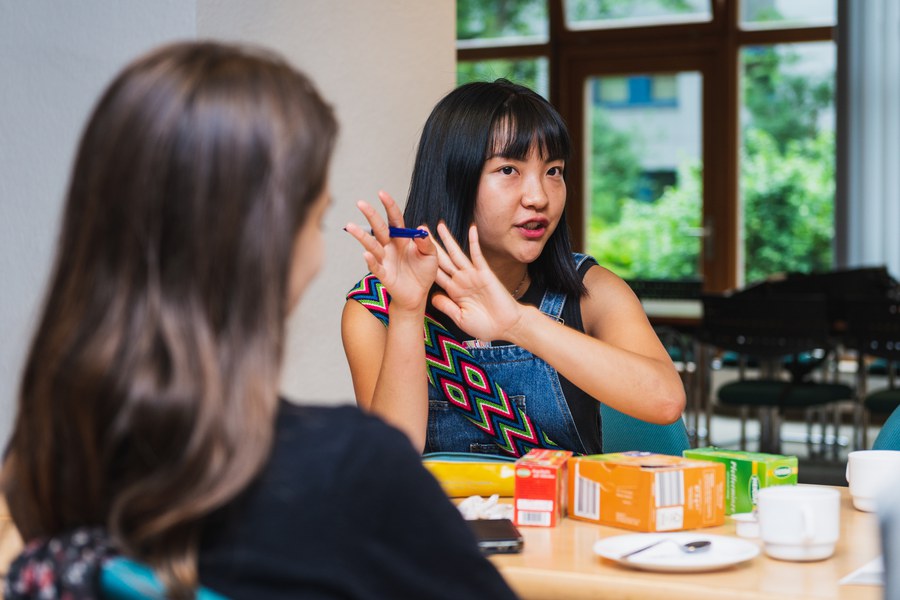
Various communities have been created in the Digitalized Workshops and Laboratories focus area, which will continue to exist beyond the duration of the project. The current contact persons can be found in the following descriptions.
XR environments can be used as a supplement to work in laboratories and workshops to create a link between theory and practice. Students can thus develop their skills in different professional and research environments without having to bear the consequences of possible safety or cost risks.
In order to pool resources and make existing expertise in the field of extended reality (XR) visible, we initiated an XR community in spring 2023. Since then, interested teachers and researchers have been meeting every other month in Dresden as part of the community to present projects, learn about the latest developments in the field of extended reality and discuss possible collaborations.
Would you like to find out more about the community and take part in one of the next meetings? You will receive regular invitations and updates on the latest activities via a non-binding registration in the community's OPAL course.
Contact persons: Jette Schwick and Alexander Zyla
Every laboratory is unique. This fact often makes it difficult to make general statements about "teaching in the laboratory". The Open Lab gives you an insight into the diversity of laboratory work in Saxony. Get to know the facilities on site and enter into an exchange with the responsible employees.
The next dates will be announced on the HTW Dresden website.
You can register in OPAL (login required) or by email to Freya Geishecker
Electronic Laboratory Notebooks (ELN) are becoming increasingly important in engineering work, research and teaching - for structured documentation, better traceability, collaborative work and sustainable research data management.
The colleagues at the Research Data Contact Point are available to discuss ELNs and answer any questions you may have.
Past events
Networking meeting on electronic lab notebooks in teaching and research
eLabFTW, openBIS, Chemotion & Co. - online exchange on electronic laboratory notebooks
In addition to the communities that were created as part of the joint project D2C2, the semester-long continuing education program for laboratory engineers, which was developed in the context of the project, will continue beyond the end of the project.
As part of the further training program developed, didactic principles are taught and regular face-to-face meetings are held to discuss whether and how you can apply this knowledge in a meaningful way. The course focuses on the following topics: Roles in the lab, constructive alignment, learning objectives, activating and motivating, supervision and feedback as well as testing in the lab. There is also a bonus module that is designed to meet the needs of the participants. At the beginning of the course, there is the opportunity to address expectations and wishes for the bonus module.
Participation can be credited towards Module 2 of the Saxon University Didactics Certificate.
Further information and current dates can be obtained from Freya Geishecker.
Tips and materials
Publications on teaching in analogue and digitized laboratories
This article discusses various theoretical principles of didactics in (partially) digitized
digitized workshops and laboratories with a focus on the practical course format. A differentiation is made between the various levels of digitization that should be considered in the conception and didactic implementation of the workshop and laboratory internship. The different levels are illustrated by references to examples of good practice.
German version: https://ll.publia.org/ll/article/view/58/112
English version: https: //ll.publia.org/ll/article/view/58/113
Franke, J., & Wegner, G. (2022). Saxon joint project D2C2 "Implementing digitization in disciplines in a participatory way: Competencies Connected" : Insight into the focus "Didactics in (partially) digitized workshops and laboratories". Lessons Learned, 2(2). https://doi.org/10.25369/ll.v2i2.58
In the podcast Education Minds, our colleague Dr. Julia Franke talks about the challenges and opportunities of teaching in laboratories.
You can find the podcast interview at https://education-minds-podcast.podigee.io/80-080-dr-julia-franke-reduktion-im-laborpraktikum
The lecture 'Didactics in digitized laboratories and workshops' took place as part of the two-week event series 'Exchange digital teaching' at the Zittau/Görlitz University of Applied Sciences. It describes possible areas for digitization in laboratories and workshops according to the level model by J. Franke and G. Wegner (2022). For each area, challenges for teachers are identified and a checklist for teachers in digitized teaching scenarios is designed.
Self-study course "Creating VR scenarios based on 360-degree videos"
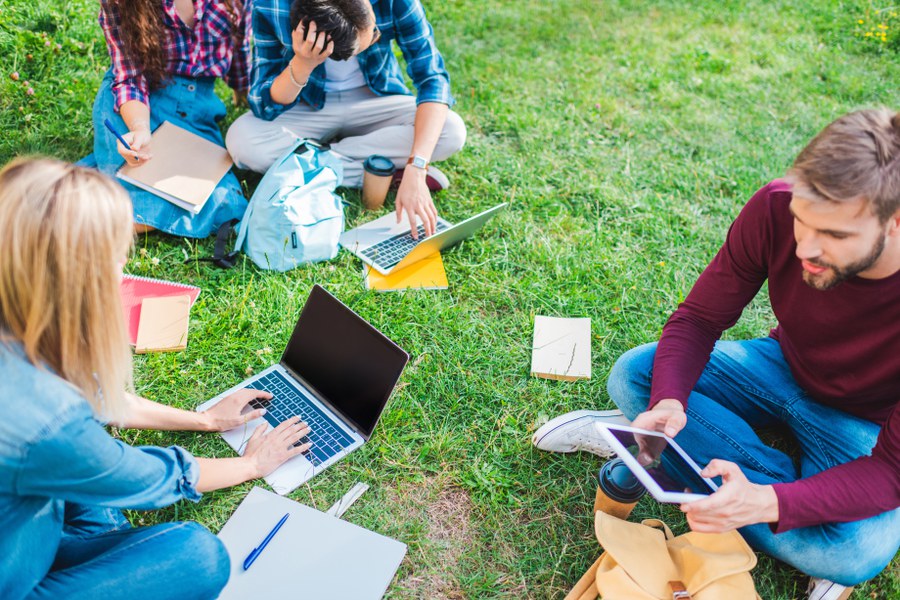
The OER self-study course "Creating VR scenarios based on 360-degree videos yourself" teaches how immersive learning scenarios can be easily produced. The course is freely accessible via LiaScript and offers a completely open, customizable project file that can be used directly for your own teaching.
Open source file for adaptation for your own teaching
Karstädt, Martin, Anja Walter and Gesine Wegner. "Learning to create VR simulations: A future-oriented perspective for personal development in teacher training" Special issue of Hochschullehre, 2025 [accepted].
Wegner, Gesine and Caroline Wermann. "Student perspectives on learning obstacles in engineering internships: Insights from a Saxony-wide survey." Lessons Learned [in progress].
Franke, Kathrin. "Introduction to Scholarship of Teaching and Learning: Workshop concept and notes on anchoring in the Saxony-wide university didactics certificate." Twillo [in progress].
Infographics
Wiki: Supervision of students in the lab
In our wiki at https://tud.link/z08x we describe approaches and methods for accompanying, supervising and instructing students in laboratory practicals. The content is updated by us on a monthly basis and is suitable for anyone who is new to teaching in the lab.
Impressions of our work


Contact us
 © TUD | Michael Kretzschmar
Research Associate
NameDr. Julia Franke
Digital Teaching in the Humanities and Social Sciences
Send encrypted email via the SecureMail portal (for TUD external users only).
All OPEN LAB materials and services are developed in the joint project D2C2 funded by the Foundation for Innovation in Higher Education .
You can find out more about D2C2 on the Saxony-wide network website.