
10th Saxon Data Salon - Presentations
We are pleased to once again host many exciting presentations at this year's 10th Saxon Data Salon.
You can find more information about the speakers and their presentations here:
Dr. Lioba Buscher (State Statistical Office)

"Social changes such as the out-migration of young adults and low birth rates have multifaceted causes. In order to respond with appropriate policy measures, relevant information about causes and correlations is needed. A reliable data foundation and scientific analyses are therefore becoming increasingly important."
Dr. Lioba Buscher studied and earned her Ph.D. in statistics at TU Dortmund. After several years working at the Faculty of Business and Economics at TU Dresden in the fields of statistics and econometrics, she headed the Municipal Statistics Office of the State Capital of Dresden from 2013 to 2025. Since late 2025, she has served as a division head at the State Statistical Office of the Free State of Saxony.
Presentation Title: “Who Stays? Young Adults in a Time of Change”
Abstract: In light of demographic change, young adults are increasingly coming into focus, even in Saxony. This presentation examines this age group from a demographic perspective. The group of “young adults” is currently defined as people between the ages of 16 and 40. Since 2010, this age group has accounted for about one-quarter of Saxony’s population, which currently stands at around 4 million. A downward trend is evident for the German population as a whole. In the future, the proportion of young adults in Saxony’s total population is expected to change only slightly. With regard to migration patterns, various factors must be taken into account. The high influx of young asylum seekers from abroad in 2015 and 2022 led to a change in the structure and volume of migration among young adults in the subsequent years. The demographic analysis shows that, in addition to the question of prospects for remaining in the country, it is also necessary to address the question, “Who is currently here?”
Ernst Glöckner (ifo Institute)

“Demographic change will be particularly noticeable over the next decade in professions on which we as a society rely every day—in public transportation, in utilities, or in healthcare.”
Ernst Glöckner has been a doctoral student and junior economist at the Dresden branch of the ifo Institute since 2022. His core research areas include regional economics and transportation policy.
Presentation Title: “City. Countryside. Old? A Regional Comparison of the Age Structure of the Workforce.”
Abstract: Within ten years, one-quarter of the workforce will have reached or exceeded retirement age. A new analysis by the ifo Institute in Dresden examines how these workers are distributed across individual occupational groups, systemically important jobs, and various regions of Germany. The analysis of the age structure across different occupational groups and federal states is based on employment statistics from the Federal Employment Agency. Across all 37 major occupational groups, the proportion of workers aged 55 and older varies considerably, ranging from about 15 to 40 percent. It also shows that both older and younger workers are particularly likely to hold mini-jobs. Although people in eastern Germany are, on average, older than those in the west, there is no difference in the age structure of employment relationships: The age distribution within individual occupational groups as well as in systemically important occupations shows a largely uniform picture nationwide. Only in the city-states are employees somewhat younger.
Agnes Schurig (Saxon State Ministry for Social Affairs, Health, and Social Cohesion)
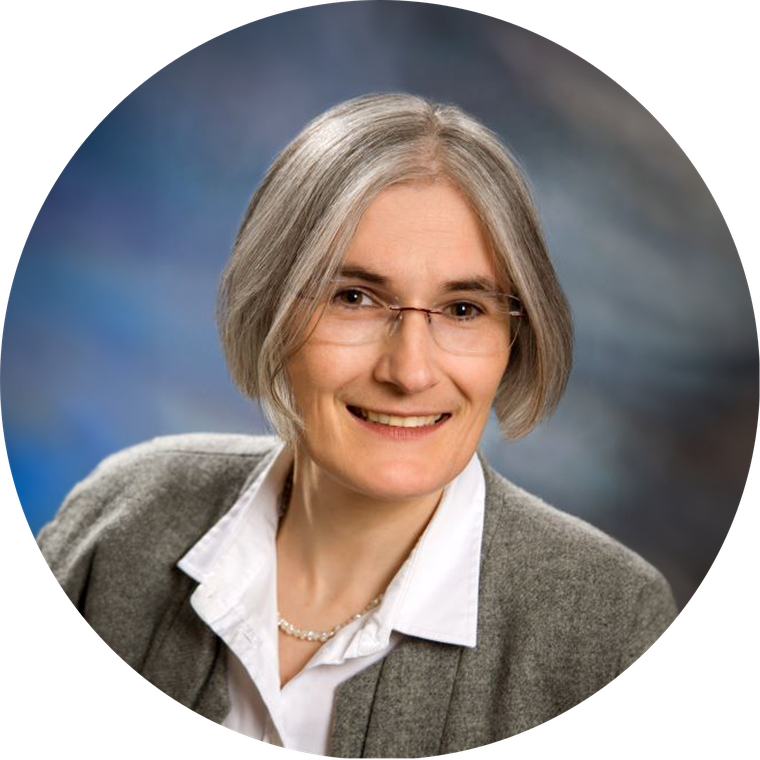
“The decline in the birth rate in Saxony is massive; the necessary adjustment measures are painful and politically difficult to implement.”
Agnes Schurig is an advisor at the Saxon State Ministry of Social Affairs, Health, and Social Cohesion and is responsible for social reporting for the Free State of Saxony. As with the two previously published Saxon Social Reports, she is currently involved in the preparation of the Third Social Report.
Presentation Title: “Where Are the Young People in Saxony?”
The birth rate in Saxony is declining across the board. Surprisingly, this also applies to the two major cities of Leipzig and Dresden. At the same time, the cohorts now entering parenthood are becoming smaller in number. As a result, the number of young people is also declining. Leipzig and Dresden are compensating for this through student populations and immigration. The decline in the birth rate is not an isolated phenomenon but is being observed worldwide. The consequences for Saxony are manifold: In addition to the need to adapt infrastructure, there is also a shortage of young people as drivers of innovation and as part of the workforce. Rural areas are particularly affected, as the two major cities, Dresden and Leipzig, are very attractive destinations for newcomers.
Prof. Dr. Susan Garthus-Niegel (TUD Dresden University of Technology)

“The DREAM study shows that a more equitable distribution of paid work, housework, and caregiving between mothers and fathers is not only a matter of fairness but also of health and family well-being. However, this can only be achieved if the appropriate framework conditions are created and gender equality is not merely lip service.”
Prof. Dr. Susan Garthus-Niegel is a professor of Preventive Work & Life Trajectories at the Faculty of Medicine at TU Dresden and is also affiliated with the Norwegian Institute of Public Health and MSH Medical School Hamburg. She leads the DREAM longitudinal study and conducts research on the interactions between work and personal life, gender, and health, with a focus on the well-being of families around the time of childbirth.
Presentation Title: “Job, Family, Health: What the DREAM Study Reveals About Young Families in Dresden”
Abstract: Findings from the Federal Statistical Office show that parents in Germany do significantly more work than childless adults—with clear gender differences in both paid and unpaid work. This can affect not only the parents’ well-being but also, for example, the parent-child relationship and child development. The DresdenStudy on Parenting, Work, and MentalHealth (DREAM) has been tracking 3,860 parents from pregnancy through their children’s current school-age years. Using data collected at multiple time points, the study examines how young parents balance work and family, how roles are distributed between mothers and fathers, and what consequences everyday stress has for family mental health and family relationships. The presentation will introduce key findings from the DREAM study and discuss what these implications are for creating family-friendly living and working conditions in Dresden and Saxony.
Lena Marie Uhlmann, M.Sc. (TUD Dresden University of Technology)

“Who am I when everything is changing—and where do I belong? These questions preoccupy many young people, especially during periods of major life transitions. In my presentation, I will highlight current research findings on social identity and explain the mechanisms that determine whether a sense of belonging succeeds or fails.”
Dr. Lena Marie Uhlmann is a Research Associate at the Chair of Work and Organizational Psychology at TU Dresden. Her research focuses on social identity, loneliness, and the effects of life-changing events on health and well-being.
Lecture Title: “Between New Beginnings and Loneliness: How Life Changes in Young Adulthood Influence Social Identity”
Abstract: Loneliness is associated with a variety of negative health, work, and social consequences. Young adults are considered a particularly at-risk group: Major life events such as moving out of the parental home, transitioning to college, or changing relationships are common during this life stage and can destabilize social networks and contribute to loneliness—a challenge that is also gaining significance in the context of out-migration and regional mobility among young people.
This presentation uses the Social Identity Model of Identity Change (SIMIC; Haslam et al., 2021) as its theoretical framework, which describes two central protective pathways: the maintenance of existing social identities (identity continuity) and the development of new group affiliations (identity gain). Empirical findings on various life-changing events in young adulthood will be presented and interpreted within the framework of the model. Finally, practice-oriented recommendations for action at the individual, institutional, and societal levels will be derived, illustrating how young adults can be supported in a targeted manner during periods of change.