
Resource-efficient construction and conservation
Table of contents
- I - 13 Bewertung der Oberflächenzugfestigkeit niedrigfester Stahlbetonplatten
- I - 12 Building Physics of Multi-Layer Exterior Wall Assemblies Made of Natural Fibre Materials
- I - 11 Structural Investigations of Multi-Layer Walls with a Geopolymer Exterior Layer
- I - 10 Interface Mechanisms and Durability of Multi-Layer Natural Fibre Panels
- I - 9 Influence of Biomass Hydrophobization on Mineral Binders
- I - 8 Multi-Layer Partition Wall System Made of Material-Homogeneous Panel Products
- I - 7 Multi-Disaster-Resilient Homes
I - 13 Bewertung der Oberflächenzugfestigkeit niedrigfester Stahlbetonplatten
Bei der Instandsetzung historischer Stahlbetonbauwerke ist die zuverlässige Bewertung der vorhandenen Betonqualität eine zentrale Voraussetzung für die Planung geeigneter Maßnahmen. Eine wichtige Kenngröße ist dabei die Oberflächenzugfestigkeit des Altbetons. Insbesondere bei sehr niedrigfestem Beton fehlen jedoch bislang belastbare und normativ abgesicherte Ansätze für deren statistische Bewertung.
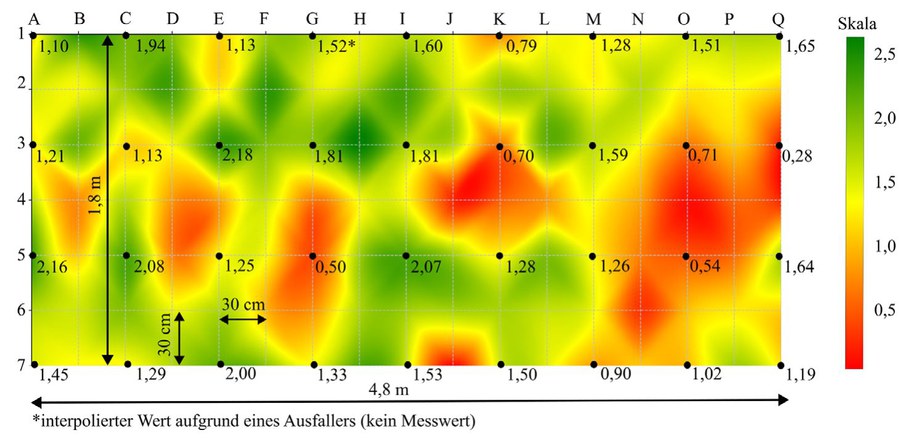
Heatmap zur Verteilung der Oberflächenzugfestigkeit in einer Decke im Zechenhaus Brieske
Im Rahmen dieser Arbeit werden umfangreiche Messdaten aus historischen Bauwerken, unter anderem dem Zechenhaus Brieske, dem Feintuchwerk Forst und dem Flughafen Tempelhof, sowie aus reproduzierten niedrigfesten Betonplatten ausgewertet. Ziel ist es, die Verteilung und Streuung der Oberflächenzugfestigkeit zu untersuchen und den Einfluss des Stichprobenumfangs auf die Ermittlung charakteristischer Werte zu bewerten. Dabei wird auch untersucht, inwieweit Zusammenhänge zwischen Oberflächenzugfestigkeit, Druckfestigkeit und Spaltzugfestigkeit bestehen.
Auf Grundlage der statistischen Auswertungen und einer kurzen Recherche zu bestehenden normativen Regelungen soll schließlich ein praxistauglicher Bewertungsvorschlag entwickelt werden. Dabei steht insbesondere die Frage im Mittelpunkt, wie eine ausreichende Datengrundlage gewählt werden kann, um sowohl eine unnötig konservative als auch eine zu optimistische Bewertung der vorhandenen Betonqualität zu vermeiden.
Die Arbeit bietet die Möglichkeit, mit realen Messdaten aus historischen Bauwerken zu arbeiten, statistische Methoden praktisch anzuwenden und einen direkten Beitrag zur Weiterentwicklung der Bestandsbewertung zu leisten.
Ansprechpartner:
Dipl.-Ing. (FH) Jan Berger (HTW Dresden / KREBS+KIEFER Ingenieure GmbH)
0162 329 1392
0351 462 3313
David Sandmann, M.Sc. (TU Dresden)
0351 463-35529
I - 12 Building Physics of Multi-Layer Exterior Wall Assemblies Made of Natural Fibre Materials
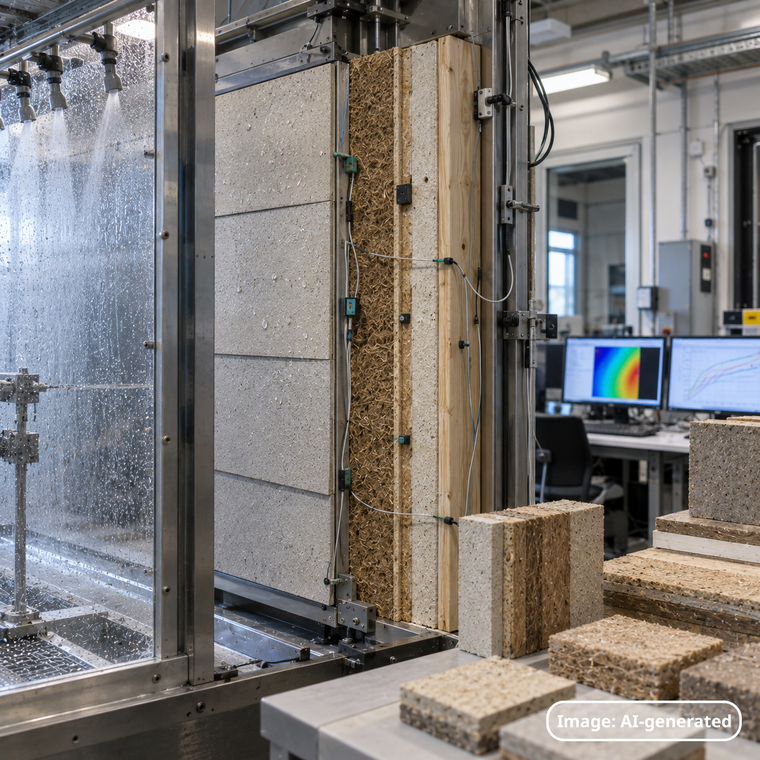
Sustainable and resource-efficient construction methods require high-performance exterior wall systems, particularly in modular and serial construction. Due to their ecological properties and thermal insulation performance, bio-based natural fibre materials offer significant potential for such applications. However, their long-term use requires a targeted building-physics assessment and optimisation of the heat and moisture behaviour of multi-layer wall assemblies.
The aim of this thesis is the building-physics analysis, assessment and optimisation of a multi-layer exterior wall assembly made of natural fibre materials for use as a façade panel in modular or selective construction. For this purpose, the relevant material properties are to be compiled, suitable material combinations evaluated, and the hygrothermal behaviour of different wall assemblies investigated numerically.
Can be completed as a project work, master's, or diploma thesis. The specific tasks will be tailored in coordination with the student.
Contact person:
Dr. Michael Kraft
Hentschke Bau GmbH - Technikum
+49 151 5510 3502
Dipl.-Wi.-Ing. Johanna Richter
+49 351 463-39820
I - 11 Structural Investigations of Multi-Layer Walls with a Geopolymer Exterior Layer
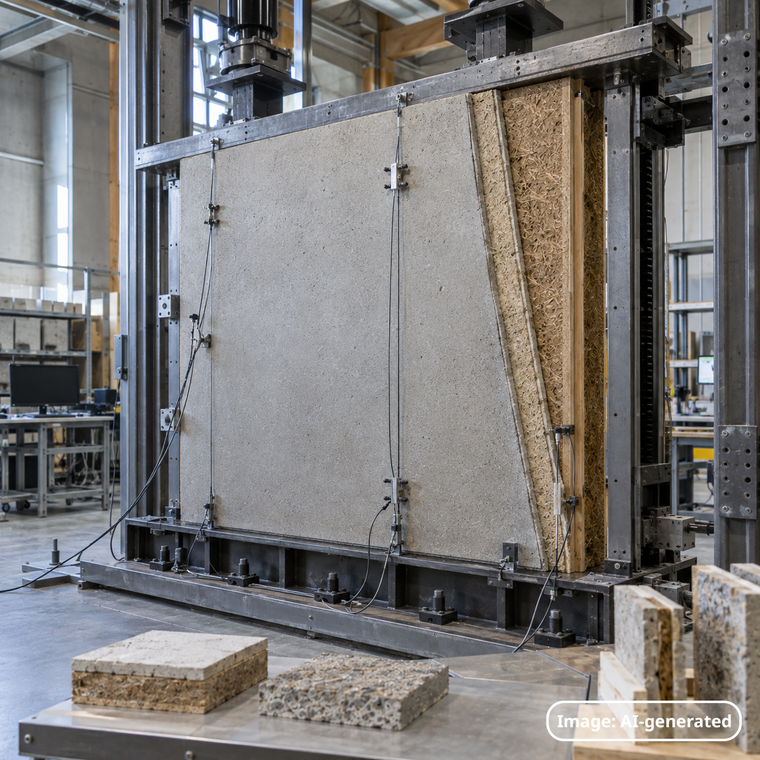
Multi-layer wall and facade systems made of geopolymer materials and sustainable substrate materials offer significant potential for resource-efficient and circular construction products. However, their safe and durable application requires a sound understanding of the mechanical interaction between the individual layers and the resulting stresses and deformations under realistic temperature, moisture, wind, and self-weight effects.
The aim of this thesis is the theoretical and experimental investigation of the load-bearing and deformation behaviour of multi-layer wall assemblies comprising a weather-exposed geopolymer exterior layer and a substrate panel made of sustainable, mineral- or organically bonded natural-fibre building materials.
Can be completed as a project work, master's, or diploma thesis. The specific tasks will be tailored in coordination with the student.
Contact person:
Dr. Michael Kraft
Hentschke Bau GmbH - Technikum
+49 151 5510 3502
Dipl.-Wi.-Ing. Johanna Richter
+49 351 463-39820
I - 10 Interface Mechanisms and Durability of Multi-Layer Natural Fibre Panels
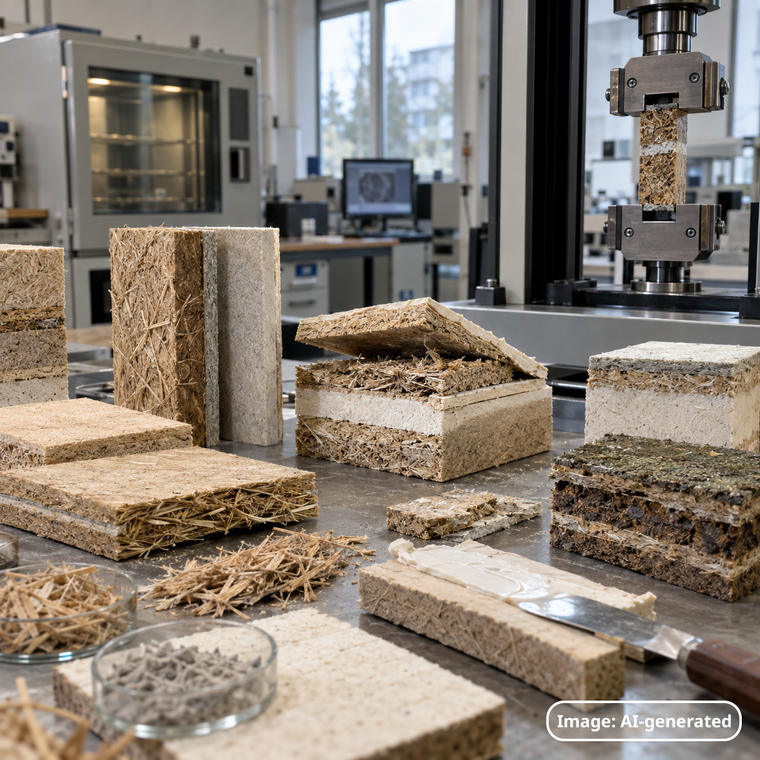
Multi-layer natural fibre panels offer significant potential for high-performance, resource-efficient and circular construction products through the combination of organically and mineral-bound materials. However, their long-term application requires an in-depth understanding of the interface mechanisms and the durability of the composite under moisture, temperature and weathering effects.
The aim of this thesis is the theoretical and experimental investigation of the interfaces in multi-layer natural fibre panels with regard to bond strength, failure behaviour and durability. Both material-homogeneous and hybrid composite systems consisting of organically and mineral-bound natural fibre panels are considered. Particular attention is given to the influence of the adhesive system, material properties and surface characteristics on the formation of a high-performance bond and on its behaviour under laboratory ageing and natural weathering. Based on the results, the key influencing parameters are to be identified and recommendations for robust and sustainable multi-layer building components are to be derived.
Can be completed as a project work, master's, or diploma thesis. The specific tasks will be tailored in coordination with the student.
Contact person:
Dr. Michael Kraft
Hentschke Bau GmbH - Technikum
+49 151 5510 3502
Dipl.-Wi.-Ing. Johanna Richter
+49 351 463-39820
I - 9 Influence of Biomass Hydrophobization on Mineral Binders
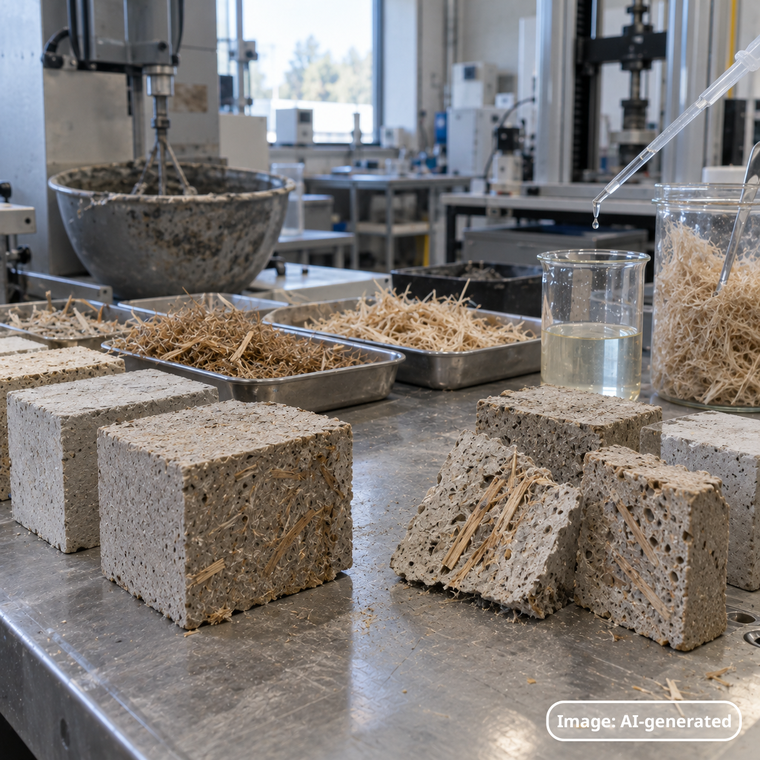
Lignocellulosic biomass has significant potential for use in sustainable mineral-bound building materials. However, its high water absorption and the release of soluble constituents may adversely affect the setting, hardening and overall performance of mineral binders. Hydrophobization methods offer a potential solution, but their influence on hardening behaviour and interfacial bond strength has so far been insufficiently investigated.
The aim of this thesis is to systematically investigate the influence of different hydrophobization methods and agents on the hardening behaviour of mineral binders in combination with lignocellulosic biomass. For this purpose, suitable hydrophobization methods are to be selected, applied to defined biomass fractions and evaluated with regard to their effect on binder reactions.
Can be completed as a project work, master's, or diploma thesis. The specific tasks will be tailored in coordination with the student.
Contact person:
Dr. Michael Kraft
Hentschke Bau GmbH - Technikum
+49 151 5510 3502
Dipl.-Wi.-Ing. Johanna Richter
+49 351 463-39820
I - 8 Multi-Layer Partition Wall System Made of Material-Homogeneous Panel Products
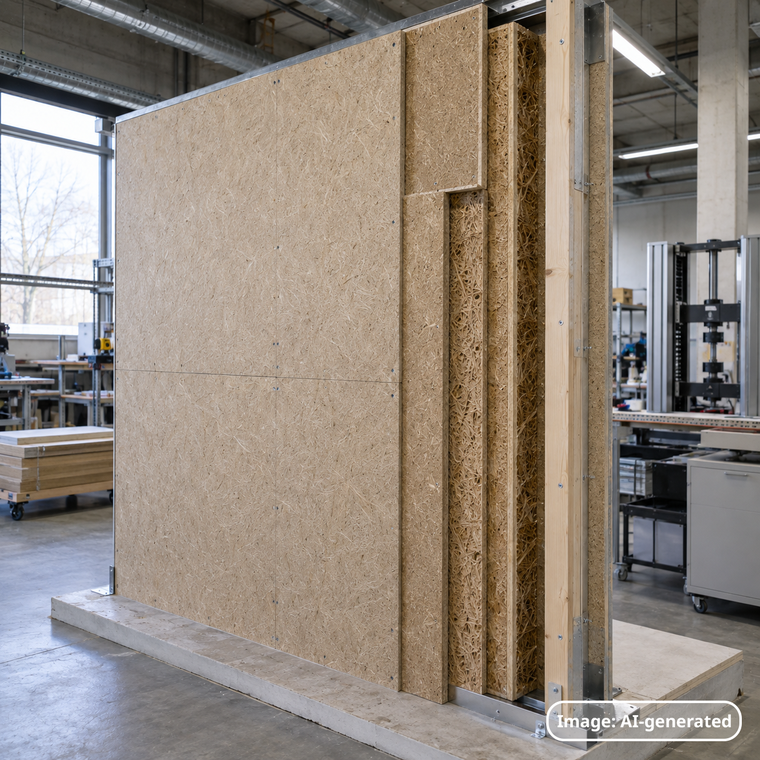
The high material diversity of conventional partition wall systems complicates disassembly, material-specific separation and high-quality recycling, thereby hindering the consistent implementation of circular material flows. Mono-material systems offer significant potential in this regard, but require the targeted development of suitable structural, connection and functional principles for industrial application.
The aim of this thesis is to develop and evaluate a multi-layer interior wall system based on panel products from the same material family. For this purpose, existing solutions are to be analysed and an integrated structural concept developed that takes both technical and practical requirements into account.
Can be completed as a project work, master's, or diploma thesis. The specific tasks will be tailored in coordination with the student.
Contact person:
Dr. Michael Kraft
Hentschke Bau GmbH - Technikum
+49 151 5510 3502
Dipl.-Wi.-Ing. Johanna Richter
+49 351 463-39820
I - 7 Multi-Disaster-Resilient Homes
Full Title: Multi-Disaster-Resilient Homes – Development of a Concrete Residential Building for International Markets
The demand for resilient residential buildings is increasing worldwide. In the United States alone, the housing shortage exceeds five million homes, while approximately 37% of residential buildings are exposed to an elevated risk from natural disasters. At the same time, nearly 90% of single-family homes in the U.S. are still constructed using timber, making them particularly vulnerable in disaster-prone regions. Similar challenges are emerging across Europe, where recurring wildfires in Spain, France, Portugal, and Greece, as well as severe storms and increasing flood events associated with climate change, are placing growing demands on the built environment.
The objective of this project or master's thesis is to investigate how a predominantly concrete-based residential building can be designed to meet the demands of future housing in regions exposed to multiple natural hazards. The work will focus on the development of a technical concept for a Multi-Disaster-Resilient Home capable of providing significantly greater resistance to earthquakes, hurricanes, tornadoes, wildfires, and flooding than conventional residential buildings and continues to be functional particularly after extreme weather events. In addition to evaluating suitable construction materials and building technologies, particular emphasis will be placed on developing innovative structural engineering and building design solutions, assessing their technical feasibility, economic viability, and long-term sustainability.
The thesis forms part of an international development project and offers the opportunity to contribute to the design of a new generation of resilient concrete homes for both the North American and European markets. The detailed scope of work will be defined jointly with the student, taking into account individual interests and academic specializations.
Contact:
Kahnt & Tietze GmbH
Dr.-Ing. Michael Frenzel
Headquarters: Anna-Kuhnow-Straße 39, 04317 Leipzig
Office: Ammonstraße 72, 01067 Dresden
0341 39285 627
www.kahnttietze.de