
Rückblick TUD Global Citizenship Lab
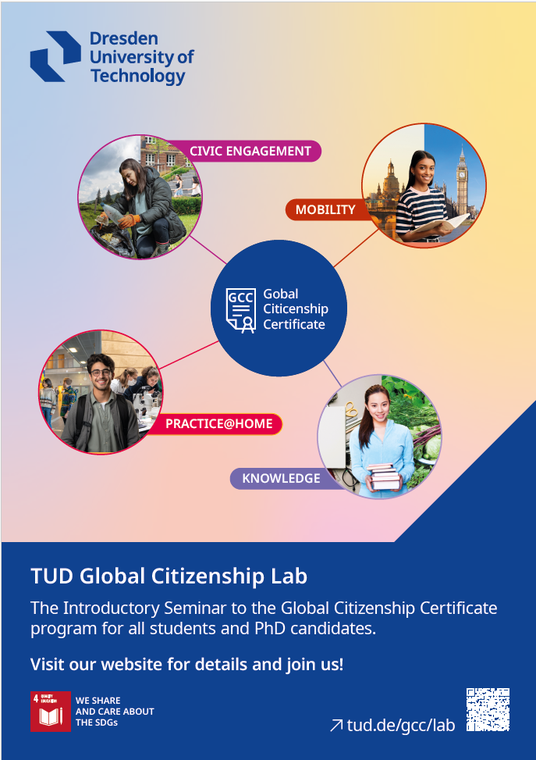
TUD Global Citizenship Lab
Rückblick zu vergangenen GC Lab-Veranstaltungen
Großartiger Kick-off! Bericht zum TUD Global Citizenship Lab im Sommersemester 2024
Das erste TUD Global Citizenship Lab war multiperspektivisch, energisch und erfolgreich.
Am 28.06. und 29.06.2024 fand erstmalig das TUD Global Citizenship Lab statt. Mit Freude blicken wir auf eine spannende und erfolgreiche Veranstaltung zurück.
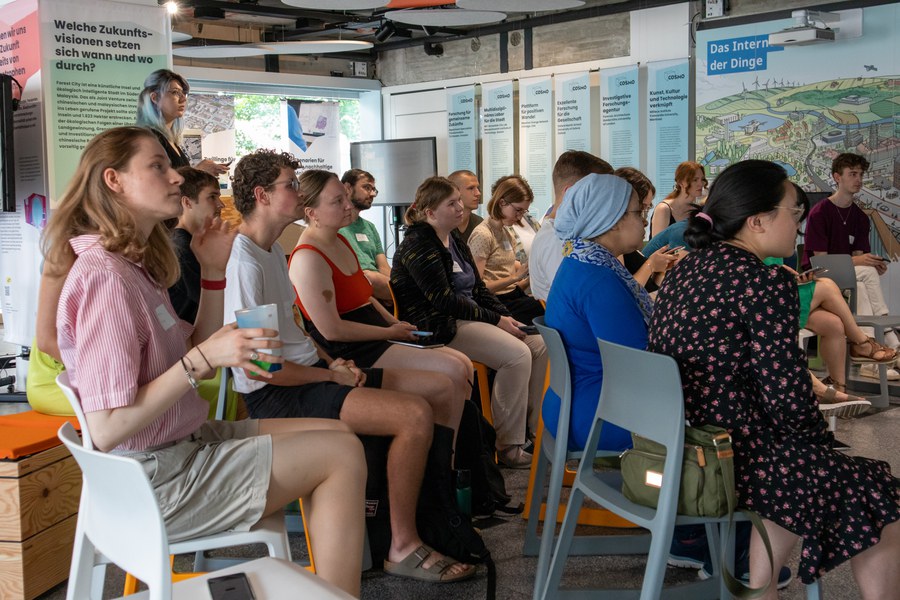
Teilnehmende des TUD Global Citizenship Lab im SoSe 2024
Über 40 Teilnehmende, darunter engagierte Studierende, Promovierende diverser Fachdisziplinen sowie TUD-interne und externe Expert:innen und Akteur:innen aus den verschiedensten Bereichen, Organisationen, Ländern und Kulturen, kamen im COSMO Wissenschaftsforum zusammen, um sich gemeinsam dem Themenkomplex der Global Citizenship Education (GCED) anzunähern, sich zu vernetzen und zu agieren.

COSMO Wissenschaftsforum
Passender als das COSMO Wissenschaftsforum im Kulturpalast am Altmarkt konnte der Ort des zweitätigen Labs nicht gewählt sein. Das Forum fungiert als Bindeglied zwischen der Wissenschaft und der Stadtgesellschaft und lädt dank seines offenen und flexibel formbaren Charakters zur Begegnung und Kollaboration ein.
Das TUD Global Citizenship Lab ist ein Kooperationslernangebot mit Unterstützung vom Zentrum für Lehrerbildung, Schul- und Berufsbildungsforschung (ZLSB) im Rahmen der Länderinitiative BNE SDG 4 – Bildung für nachhaltige Entwicklung (BNE) in der universitären Lehrkräftebildung in Sachsen, gefördert von Engagement Global durch Mittel des Ministeriums für wirtschaftliche Zusammenarbeit und Entwicklung.
Was trägt zum Mind- und Skillset einer:s Global Citizen bei?

Workshop zum Themenkomplex Global Citizenship Education
In verschiedenen interaktiven Sessions wurden u.a. die Themen „Multilingualism and Global Citizenship Education” (Dr. Rachel Bowden, ZLSB, TUD), „Globales Lernen, (Post)Kolonialismus und Global Citizenship“ (Maria Nelz, aha - anders handeln e.V./ Peter Che Nfon – Gründer von Sustainable Actions Afrika), „Ressourcenungerechtigkeit am Beispiel des Bergbaus und des Smartphones“ (Oscar Choque, Ayni - Verein für Ressourcengerechtigkeit e.V./ Francesca Piccinotti, arche noVa - Initiative für Menschen in Not e.V.) sowie „Kosmopolitische Perspektive und diskriminierungs- und rassismuskritische Haltung“ (Hàochéng Lóu, Dachverband der Migrant:innenorganisationen in Ostdeutschland) beleuchtet.
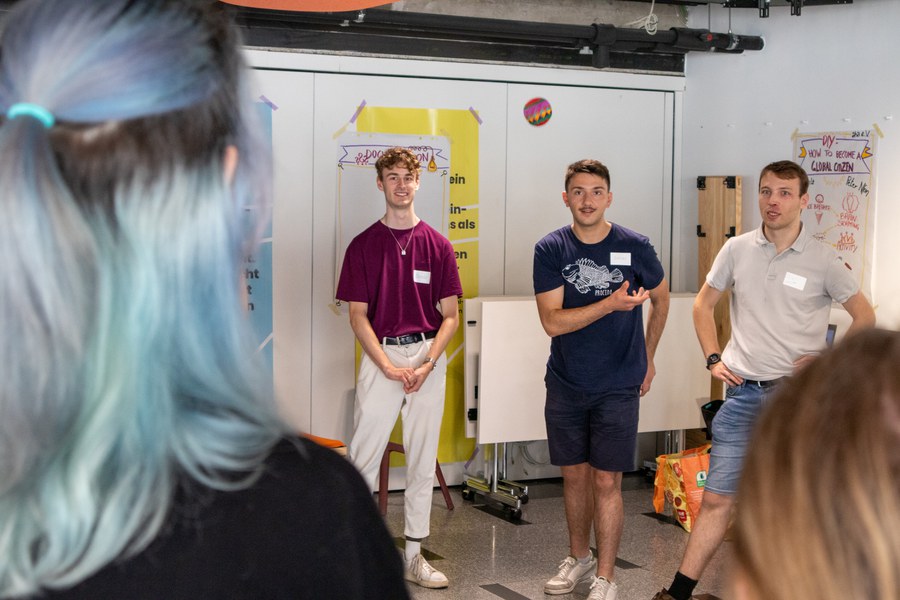
Spielerische Übungen zur Auflockerung
Auch das Erlernen und Erproben nützlicher Tools und Skills nach dem Peer-to-Peer-Ansatz war ein Herzstück des Programms: die Methode Peer Beratung für fokussierte und musterunterbrechende Lösungssuche (Klara-Johanna Fabisch, tuuwi, TUD), SMART für motivierende, greif- und umsetzbare Zielverfolgung (Marlene Maria Schreiber, reflektiert.engagiert am Integrale, TUD) und das Match-Maker-Programm als Kompass bei der Auswahl der passenden Hochschulgruppen für das studentische Engagement (Lea Hummitzsch, Integrale - Institut für studium generale, TUD).
Um alle Teilnehmenden gleichermaßen einzubinden, fand das Lab durchgehend zweisprachig auf Englisch und Deutsch mit Unterstützung weiterer Sprachen statt.
Vernetzung, Praxis, Community und Outreach

Austausch im Pitch- und Vernetzungstreffen
Ein weiteres Highlight des Labs war die äußerst lebhafte und informative Pitch- und Vernetzungsrunde am Samstag. Engagierte Vertreter:innen aus der TU Dresden und der Stadtgesellschaft gaben Einblicke in ihre Organisationen, Initiativen, Projekte, Wirkungsfelder und kamen anschließend mit den Teilnehmenden ins Gespräch.
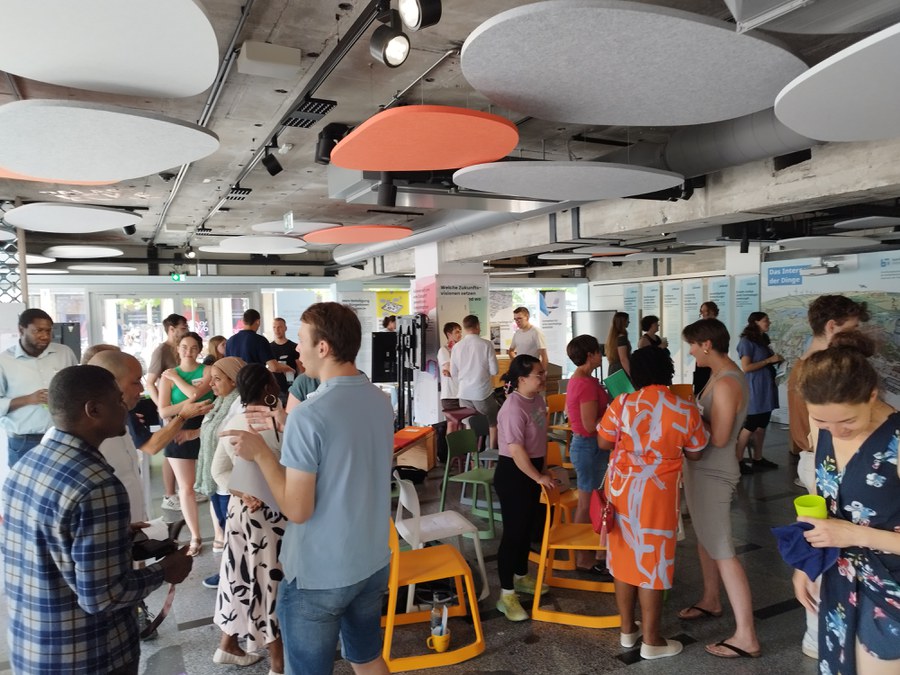
Pitch- und Vernetzungstreffen
Mit dabei waren u.a. Expert:innen aus der Zivilgesellschaft (Kampagne "Sauberes Dresden" und NGO Cradle to Cradle Sachsen; aha - anders handeln e.V.; Ingenieure ohne Grenzen; climatechallenge), Akteur:innen aus der TU Dresden (Alumninetzwerk und Internationale Regionalbotschafter:innen; CIPSEM) sowie Vertreter:innen des International Office (TUD Preis Internationalisierung; Internationales Tutorienprogramm; Kulturbüro; Stipendienprogramme für internationale Studierende; Student Mobility Programme (u.a. ERASMUS) und Buddy-Programm GSW; EUTOPIA).

Praxiseinsatz im Botanischen Garten im Projekt "BildungsAcker"
Den Abschluss des Labs bildeten zwei Praxiseinsätze, die die Bedeutsamkeit der Zusammenbringung von Knowing/Wissen und Doing/Handeln nachdrücklich unterstrichen. Der erste Arbeitseinsatz fand trotz sommerlicher Hitze mit viel Elan der Teilnehmenden im Lehr- und Schulgarten des Botanischen Gartens unter Begleitung studentischer Mitarbeitender im BNE-Projekt „BildungsAcker“ (Team Prof. Jana Markert, TU Dresden) statt.

Gemeinsames Kochen in der Alten Gärtnerei
Später führte eine Exkursion in die Alte Gärtnerei in Dresden Pieschen. Dort lernten die Teilnehmenden bei einer achtsamen Führung durch Sebastian Kaiser, einer der Gründer der Gärtnerei, nicht nur ein Stück Permakultur, sondern auch die vielschichtige transformative Geschichte und das Konzept der partizipativen Stadtteilentwicklung hinter der Gärtnerei kennen.
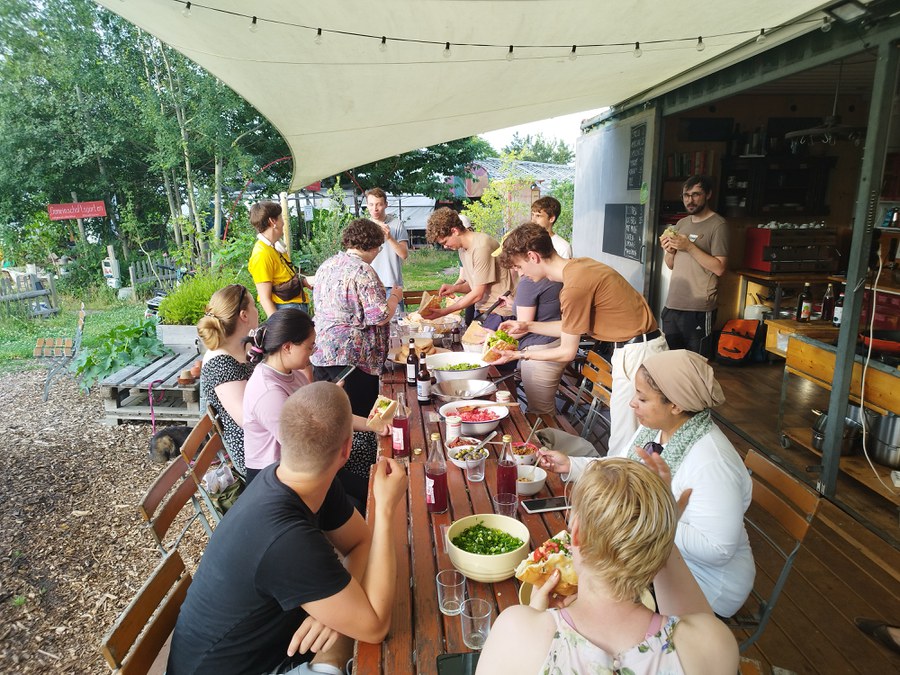
Gemeinsames Abendessen in der Alten Gärtnerei
Abgerundet wurde der Abend mit gemeinsamen Kochen, geselligem Beisammensein und einer verbindenden Reflexionsrunde. Am Ende der zwei Tagen sind spürbar neue zwischenmenschliche Verbindungen, wertvolles „Sehen“ und „Zuhören“ voneinander sowie eine zarte und solidarische Zugehörigkeit unter den Teilnehmenden entstanden. Das sozial-emotionale Lernen und Zusammenwachsen ist das beste Zeugnis einer gelungenen Bildungsveranstaltung.
„Authentic Connections“ und neue Denkanstöße – Bericht zum zweiten TUD Global Citizenship Lab
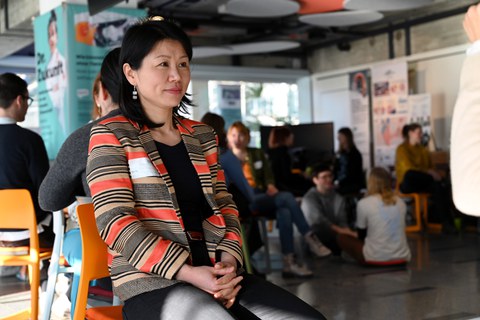
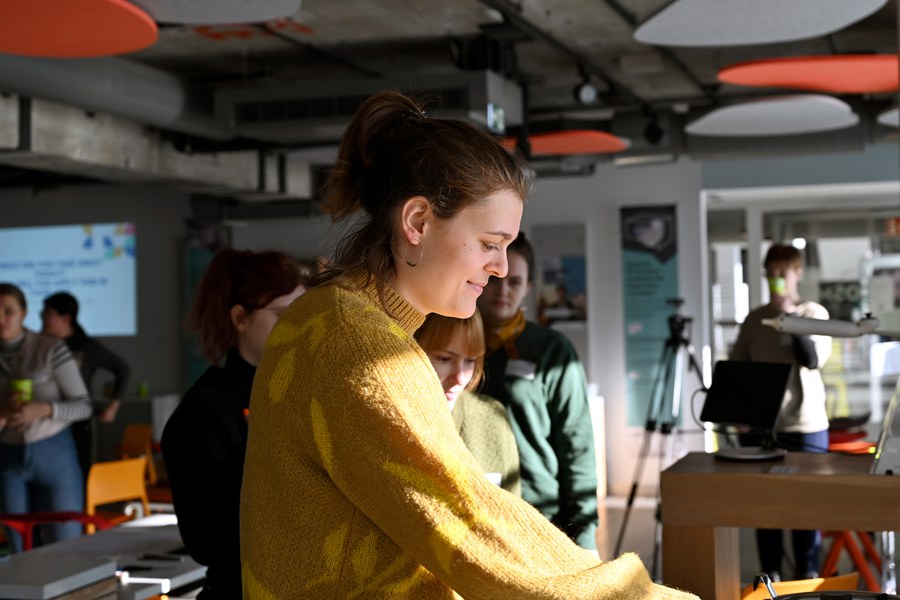
Am 17. und 18. Januar 2025 kam eine Gruppe von knapp 40 deutschen und internationalen TUD-Studierenden verschiedenster Fachrichtungen und Disziplinen sowie 12 Expert:innen aus den Themenbereichen Umweltschutz, Antidiskriminierung und Toleranz zum zweiten TUD Global Citizenship Lab zusammen.
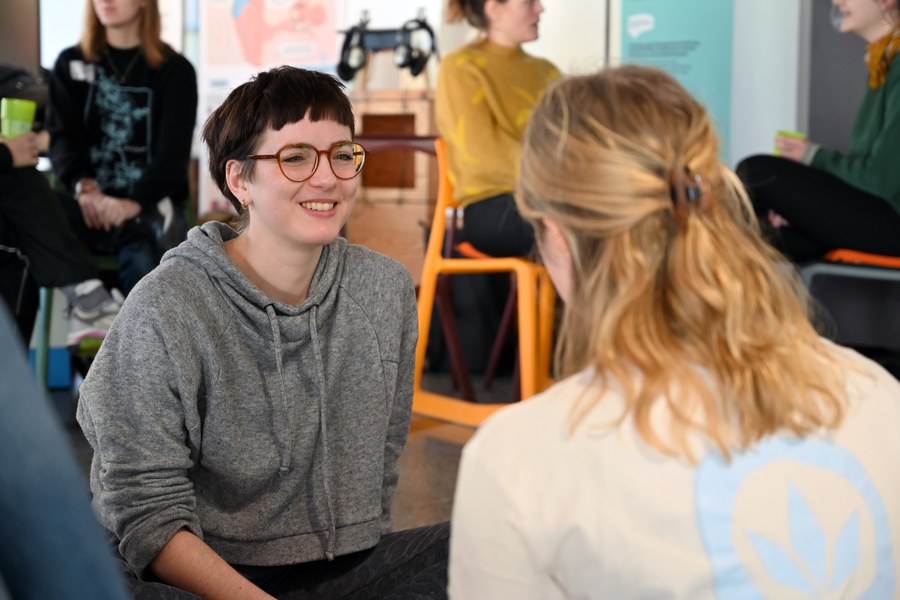
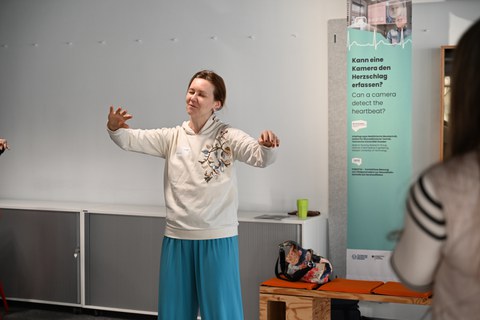
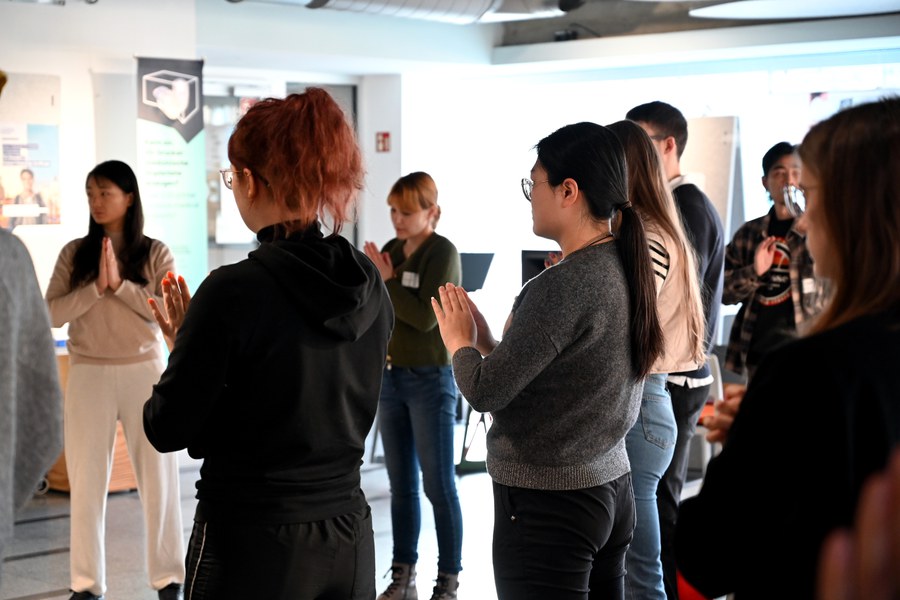
Ort des Geschehens war erneut das COSMO Wissenschaftsforum am Dresdner Altmarkt, welches sich zum Ziel gesetzt hat, als Austauschpunkt zwischen Wissenschaft und Gesellschaft zu fungieren. Der Fokus des Labs lag in diesem Semester auf dem Themenkomplex der Mindfulness. Im Geiste dieser setzte sich das Programm aus einer umfassenden Mischung theoretischer Inputsessions und praktischer Übungen wie Qi Gong zusammen.
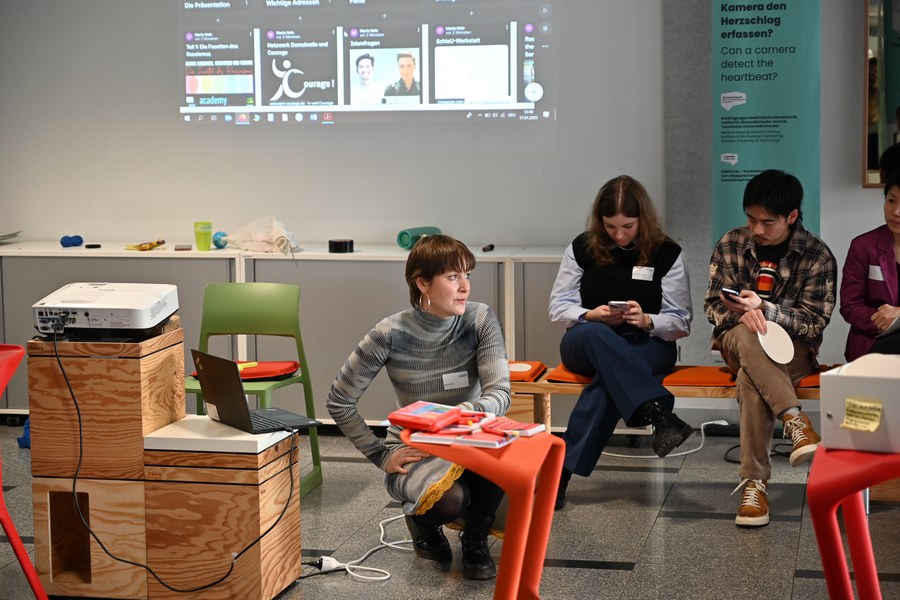
Eröffnet wurde die Veranstaltung durch die Koordinatorin des nachhaltigkeitsorientierten Vereins „aha – anders handeln e.V.“, Maria Nelz. Die studierte Tropenförsterin nahm die Teilnehmenden mit auf eine gedankliche Reise zu den Unterdrückten der Kolonialzeit. Dabei erläuterte sie umfangreich wie sich das Narrativ von Kulturen, die inhärent weniger wert seien als andere, noch heute durch unser Denken zieht.
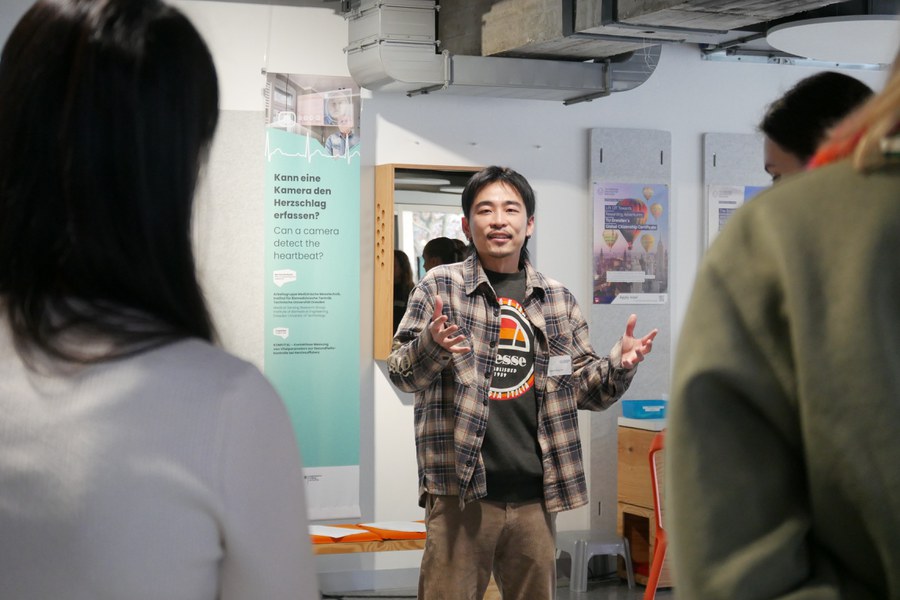
Lei Meng, Bildungsreferentin am Genderkompetenzzentrum Sachsen, und Hàochéng Lóu, Antirassismusberater beim DaMOst e.V., erweiterten die Ausführungen ihrer Vorrednerin um eine aktuelle Perspektive. Mittels anschaulicher Gruppenübungen zeigten sie, wie selbst positive Vorurteile negativen Druck auf von Rassismus Betroffene ausüben können.
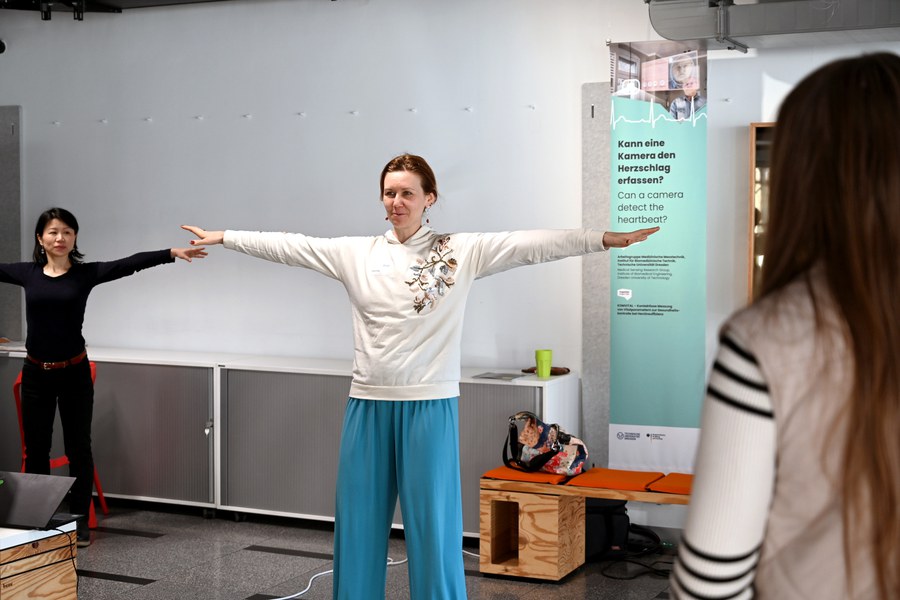
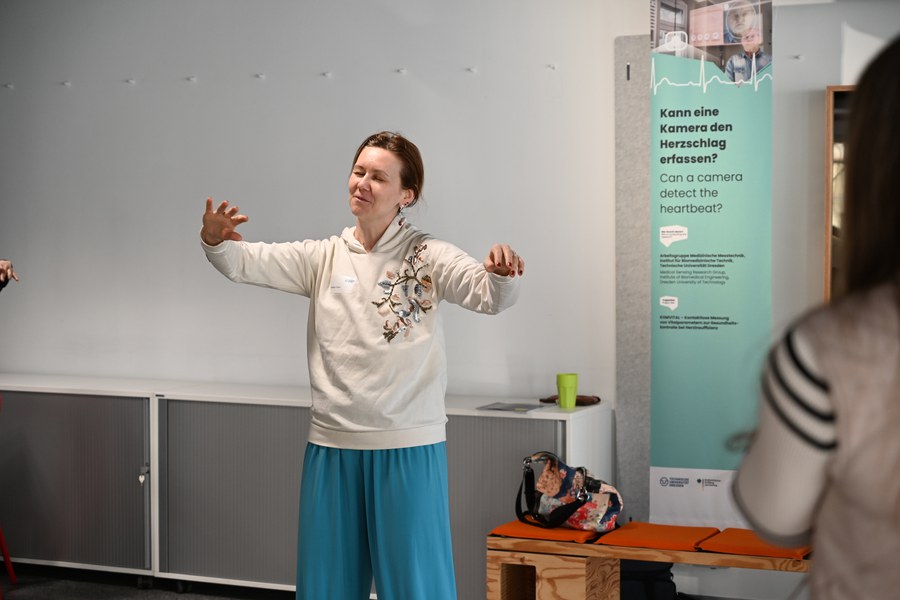
Der zweite Tag des GC Labs wurde durch Nataliya Urban, QiGong-Lehrerin aus Leidenschaft, eingeläutet. Die studierte Übersetzungswissenschaftlerin wuchs im Ural auf und praktiziert die fernöstliche Kunst der Tiefenentspannung bereits seit ihrem 16. Lebensjahr. Das gemeinsame Ausführen der Übungen gab den Anwesenden spürbar Gelassenheit und Energie für den bevorstehenden Tag.
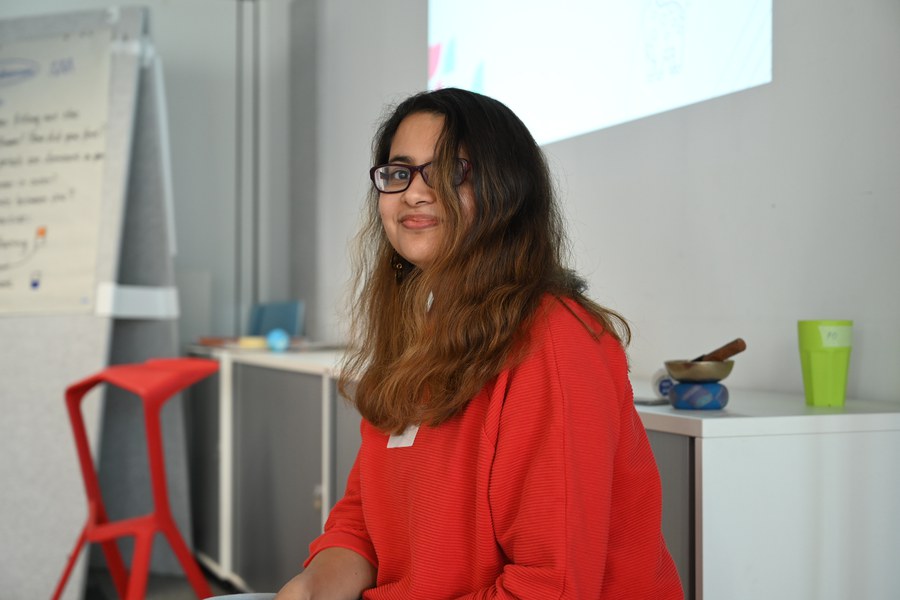
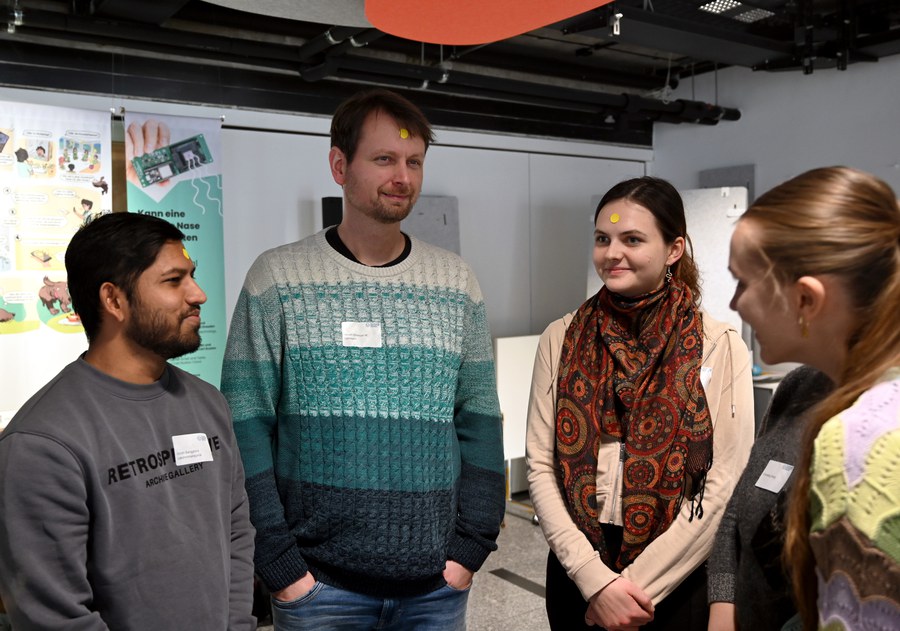
Mit Fatema Darbar, Gründerin des InterLokal Social Hub in Dresden, konnten im Anschluss Techniken eingeübt werden, Mitmenschen authentischer und tiefgreifender zu begegnen, sowohl auf professioneller Ebene als auch in persönlichen Beziehungen. Praktiken wie bspw. „Active Listening“ wechselten sich dabei mit einer Runde auf dem Hot Seat bei persönlichen Fragen, die zum Öffnen einluden, ab. Unterstützt wurde Fatema Darbar von Camila Tapia. Die gebürtige Chilenin ist Lehrerin für Englisch und Spanisch und engagiert sich ebenfalls bei InterLokal.
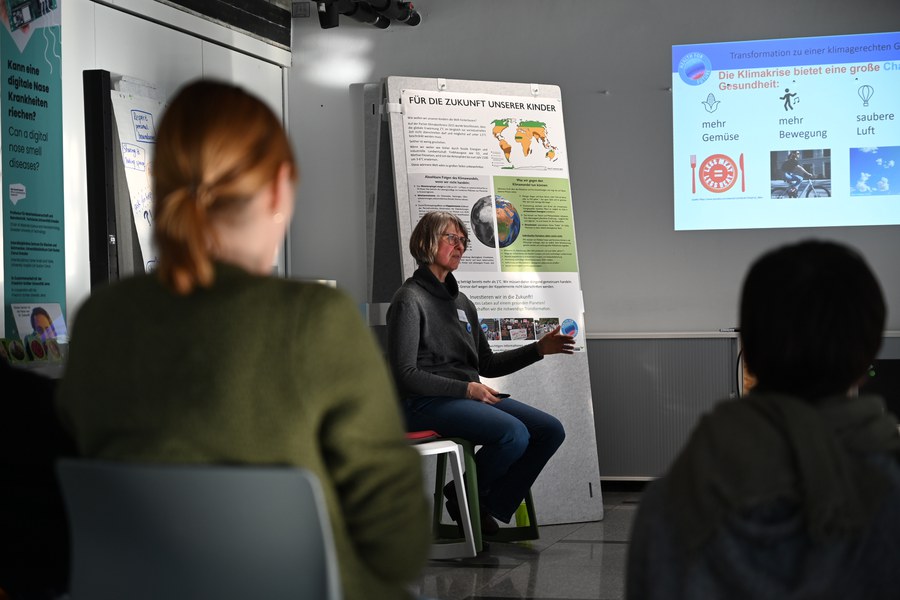
Der Vortrag von Dr. med. Charlotte Großkopf, Rebekka Post und Dr. med. Gudula Keller vom Netzwerk Health for Future Dresden machte den Teilnehmenden mit Feingefühl und dem nötigen Ernst klar, wie drastisch der Zustand der Erde durch die Klimakrise ist. Es gelang ihnen trotz aller Schwere, Möglichkeiten aufzuzeigen wie jede:r Einzelne seinen Beitrag gegen die Erderwärmung leisten und so seinen ökologischen Handabdruck verbessern kann.
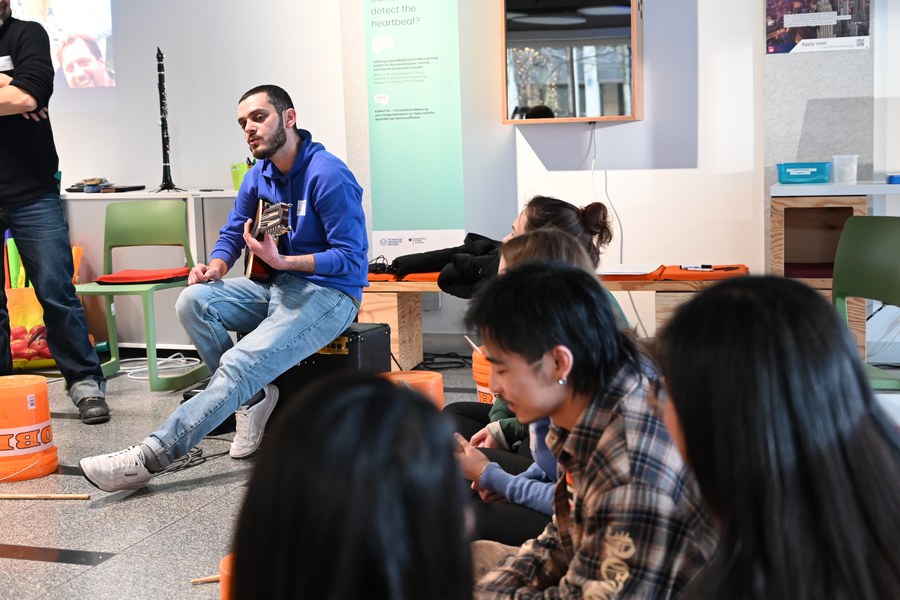
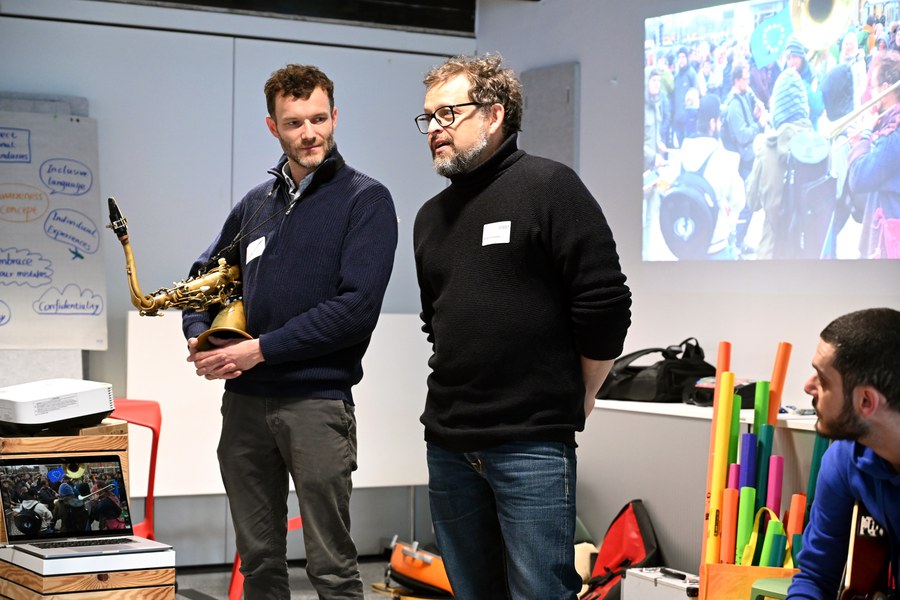
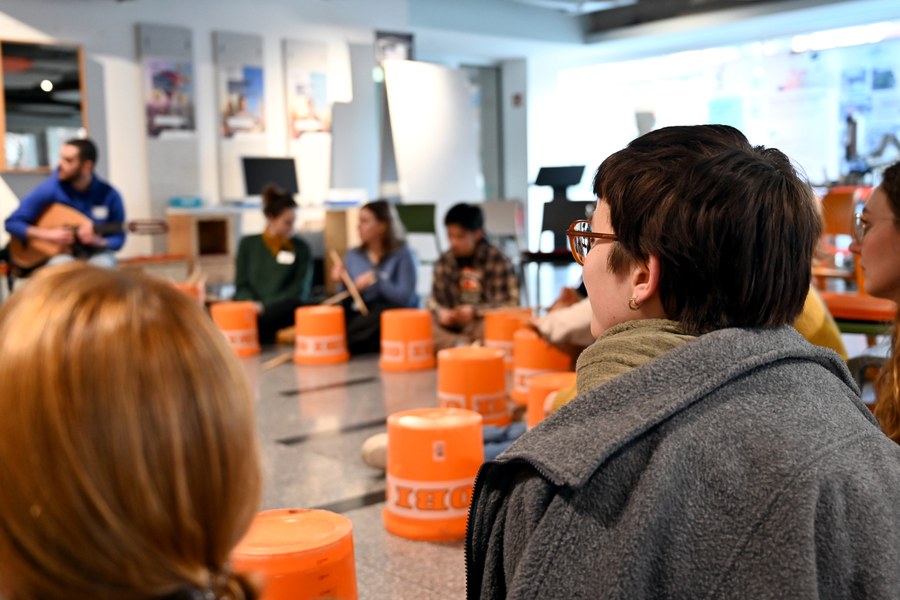
Im Anschluss bewegten und inspirierten Michal Tomaszewski, Tarek Al Hammad und Richard Ebert von Banda Comunale die Teilnehmenden in ihrer Session zu "Musik und Engagement". Dass Musik eine kraftvolle universale Sprache ist, die Menschen in ihrer Gleichwertigkeit, ihren tiefsten Sehnsüchten und schönsten Idealen miteinander verbinden sowie hartnäckige Grenzen im Kopf überwinden kann, belegten das unermüdliche Engagement und die kontinuierliche musikpädagogische Arbeit der drei Musiker und Banda-Mitglieder eindrücklich. Das Trio sorgte nicht nur für gute Laune und korrekt gestimmte Instrumente, sondern leitete auch den einen oder anderen gemeinsamen Song an, dessen Percussion-Begleitung kurzerhand auf Kunststoffeimern aus dem Baumarkt improvisiert wurde.
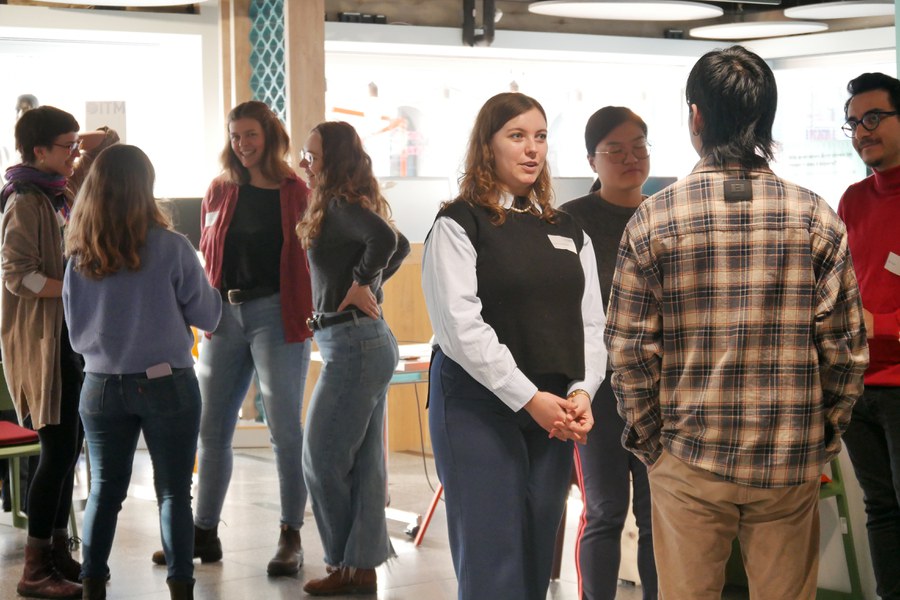
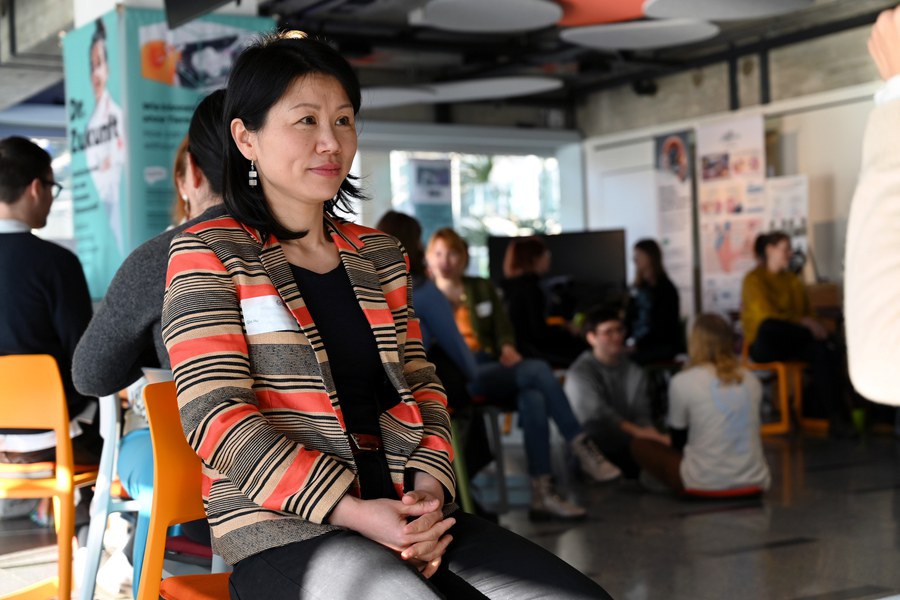
Abgerundet wurde das Wochenende durch eine Reflexionssession mit Qin Hu, Initiatorin und Koordinatorin des TUD GCC-Programms, die zum Nachdenken und kreativen Verarbeiten des Erlebten mithilfe einer Zeichen- und Schreibübung einlud.
Mit verschiedensten warmen Suppen wurden die Teilnehmenden an beiden Tagen durch das Catering der Suppenbar Dresden bestens versorgt.
Wir möchten uns ganz herzlich bei unseren Referentinnen und Referenten sowie allen Teilnehmenden bedanken blicken auf ein erfolgreiches und bereicherndes zweites TUD Global Citizenship Lab zurück und freuen uns schon jetzt auf die nächste Einführungsveranstaltung des GCC-Programms im Sommersemester!
Einige Impressionen aus dem Lab:
© Mascha Schelten
© Mascha Schelten
© Mascha Schelten
© Mascha Schelten
© Mascha Schelten
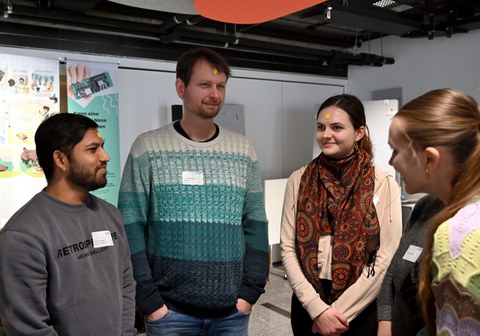
© Mascha Schelten
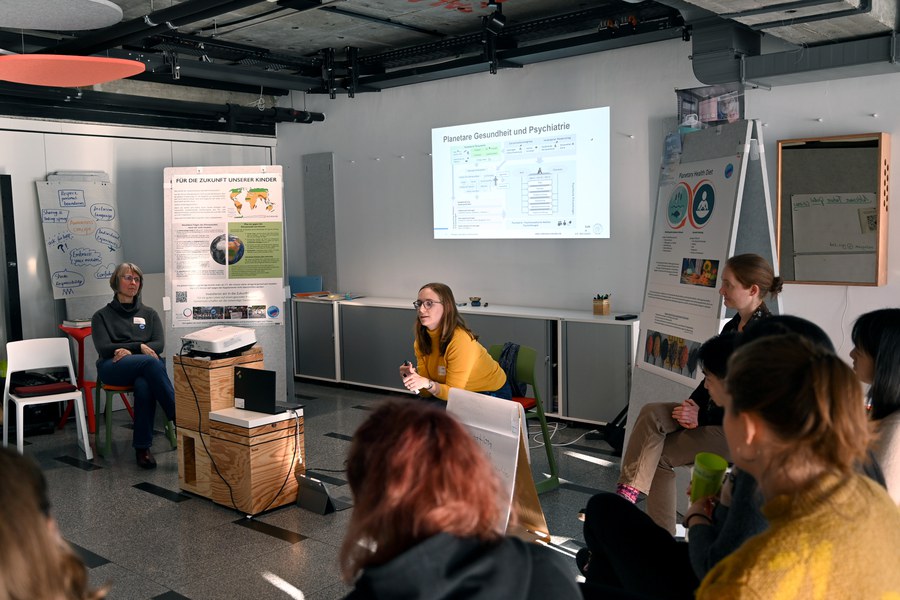
© Mascha Schelten
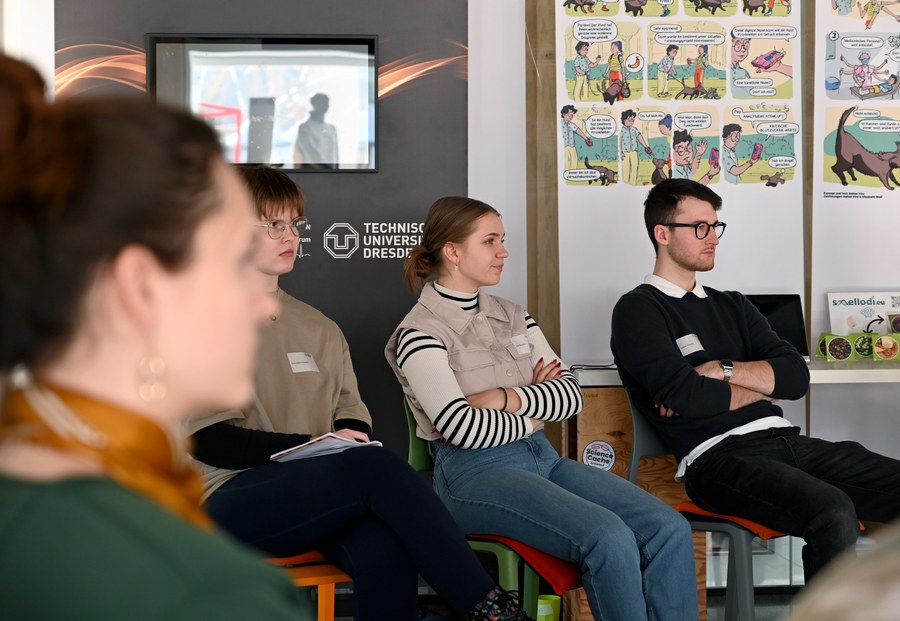
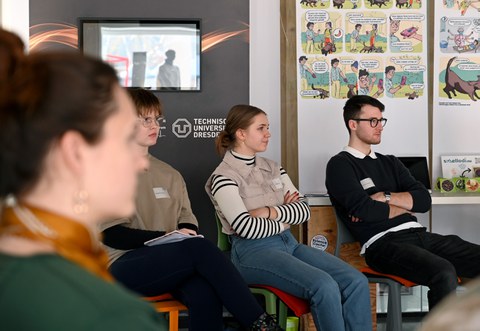
© Mascha Schelten
© Mascha Schelten
"Global Citizenship Education through Partnership and Participation" – Rückblick zum TUD Global Citizenship Lab im SoSe 2025
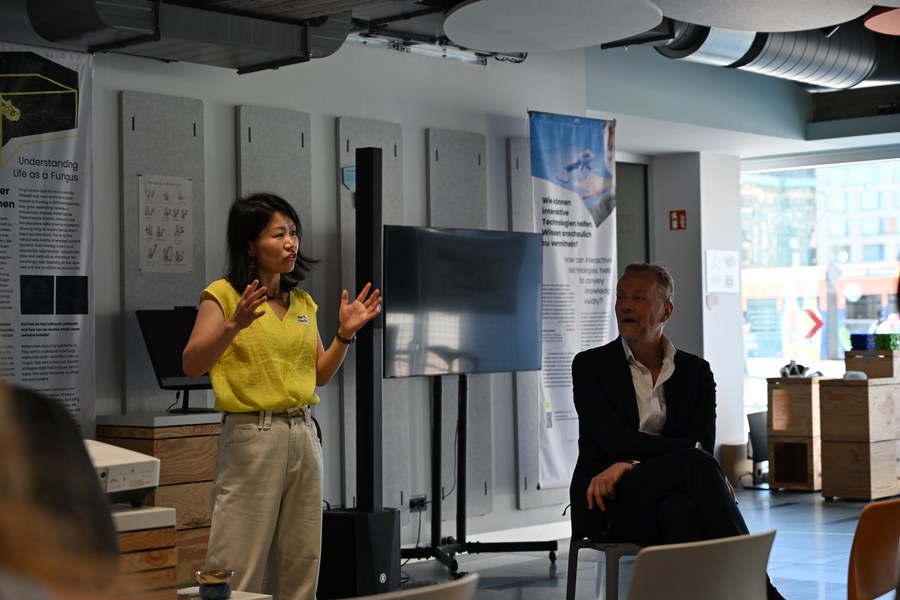
Das nunmehr dritte TUD Global Citizenship Lab fand unter der Leitung des International Office in Kooperation mit Zentrum für Lehrkräftebildung, Schul- und Berufsbildungsforschung (ZLSB) am 13. und 14. Juni 2025 im COSMO Wissenschaftsforum statt. Die Location am Dresdner Altmarkt, die eine wichtige Schnittstelle zwischen Wissenschaft und Stadtgesellschaft bildet, beherbergt das Lab seit dem Kick-Off des Programms „TUD Global Citizenship Certificate“ im Sommer 2024.

Das Motto des Labs lautete in diesem Sommer “Global Citizenship Education through Partnership and Participation”. Teilgenommen haben sowohl engagierte lokale, nationale und internationale Studierende aus grundständigen und weiterführenden Studiengängen, als auch Young Researchers wie Promovierende. Das Programm bot eine bunte Mischung aus interaktiven Workshops, Pitch- und Diskussionsrunden und erlebnisorientierten Aktivitäten im Freien. Die fachliche und kulturelle Vielfalt war in den kollaborativen Sessions deutlich zu spüren. Ein internationales Flair beherrschte die zweitägige Veranstaltung.
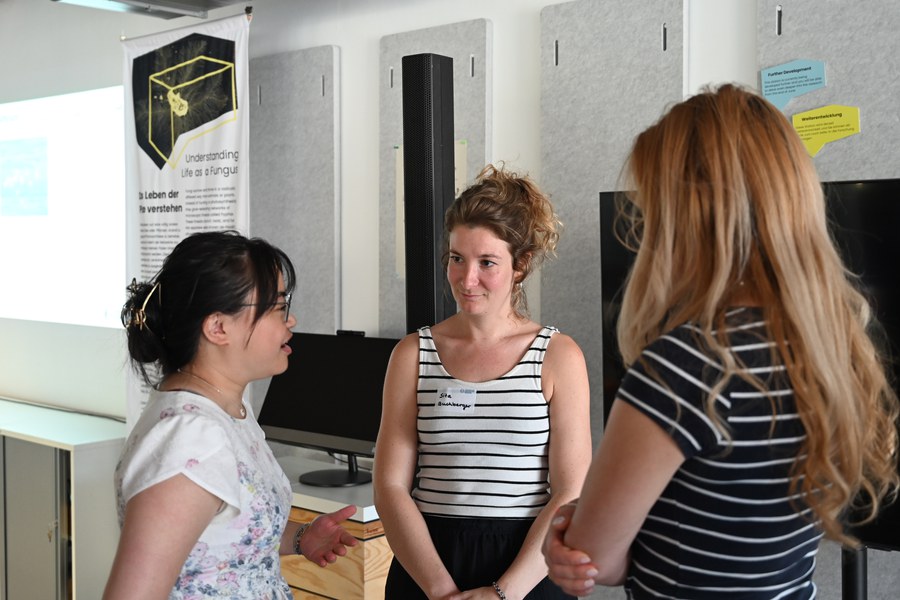
Eröffnet wurde das Lab mit einer transformativen „Sustainability Challenge!“. Geleitet von Dr. Rachel Bowden vom ZLSB entstand unter Mitwirkung von Educator und Jugendbetreuer:in Flor de Matos (CAMBIO e.V.) und Eine-Welt-Promoterin Sita Buchberger (arche noVa) ein ganztägiges Programm. Erprobt wurde ein Kompetenzmodell von Brundiers et al. (2021)/Bianchi et al. (2022) zur ganzheitlichen Förderung von Nachhaltigkeitskompetenzen. Die Kombination aus tiefergehender Selbstreflexion, systematisch-analytischer Methodik, Out-of-the-Box Thinking und lösungsorientierter Gruppenarbeit half den Teilnehmenden, eine neue Perspektive auf lokal-globale Probleme einzunehmen und sich selbst als wirksame agents of change zu begreifen.

Den zweiten Tag des TUD Global Citizenship Labs läutete eine Einführung in das GCC-Programm sowie sein Partnerprogramm, das EUTOPIA Certificate of Internationalisation (EUCI) ein. Die Gäste Lewis Beer (EUTOPIA, University of Warwick) und Werner de Wit (Stellenbosch University, South Africa) brachten den Studierenden in einem hybriden Format die Methode UNESCO Story Circles näher. Diese trainiert das vorurteilsfreie Zugehen auf und Wertschätzen von Anderen, um Bias in den Köpfen und Begegnungen achtsam entgegenzuwirken und dadurch tiefergehende Verbindungen und Partnerschaft – basierend auf einem neuen, wertvollen Gemeinschaftsgefühl – zu ermöglichen.

In der anschließenden Pitchrunde mit Podiumsdiskussion erhielten die Teilnehmenden anschauliche Einblicke in Partnerschaft im Rahmen akademischer Zusammenarbeit durch Dr. Sebastian Spitzer (ILK, TUD) und Dr. Soon Ho Yoon (KIST), die dem Format digital beiwohnten. Die beiden Wissenschaftler verbindet eine zehnjährige freundschaftliche und professionelle Zusammenarbeit im erfolgreichen internationalen Kooperationsprojekt Ländernetzwerk KOREA. Ergänzt wurde deren Perspektive durch Charlotte Müller von der Freiwilligenagentur ehrensache.jetzt (Bürgerstiftung Dresden), die interessante Einblicke in und wichtige Denkanstöße zu Partizipation und Egalität im Rahmen der Ehrenamtsvermittlung gab. Kristina Krömer, Gründerin und Koordinatorin preisgekrönten aufsuchenden Demokratieprojektes metro_polis, teilte relevante und inspirierende Erkenntnisse und Erfahrungen aus ihrer Arbeit zur Stärkung des Dialogs und der demokratischen Teilhabe von Menschen in Sachsen.
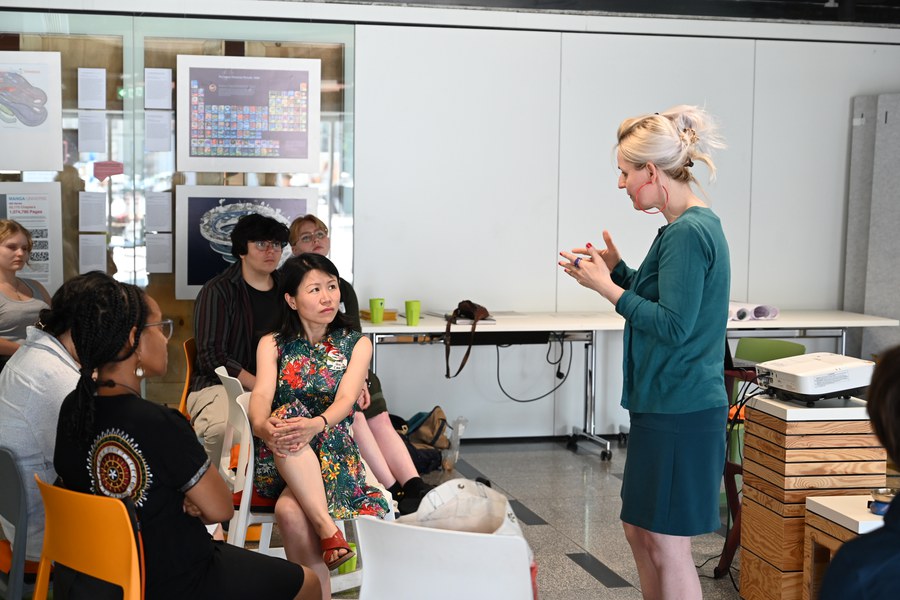
Im anschließenden Workshop vermittelte Kristina Krömer hilfreiche Einstellungen, effektive Methoden und Gesprächskompetenzen aus dem metro_polis Projekt, welches in fahrenden Straßenbahnen und Zügen stattfindet und damit Personen unterschiedlichster Herkunft und Lebenslagen erreicht. Die von ihr vermittelten Skills können genutzt werden, um Bedürfnisse des Gegenübers bei gegensätzlichen oder gar provokativen Meinungen zu verstehen und dadurch Kontroversen konstruktiv zu moderieren. Dies ermöglicht, pauschale (Vor-) urteile zu hinterfragen und trotz scheinbar großer Unterschiede einen Konsens als Teil einer demokratischen Auseinandersetzung zu bilden.
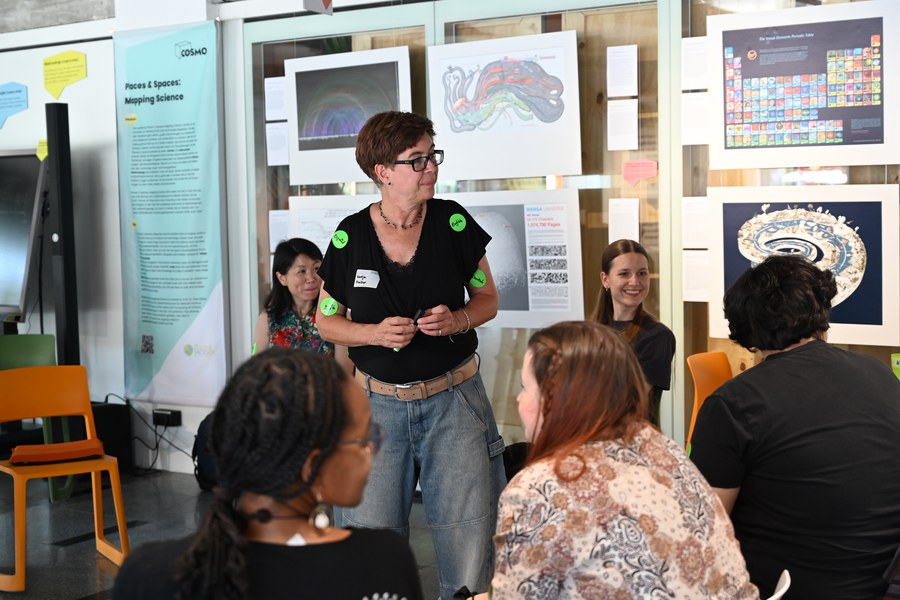
Katja Heiser, Theatermacherin, -pädagogin und Kulturschaffende, u.a. bei der Bürgerbühne Dresden, explorierte in ihrem Workshop mit dem Titel „Wir alle… – Performative Methoden zum transkulturellen Austausch“ mit den Teilnehmenden aktivierende, kreative und performative Zugänge und Kommunikationsmethodik. Zwischen Spaß, Interaktion und Emotionalität erprobten die Teilnehmenden neue Sprachen, interaktive Räume und Zusammenarbeit in einer transkulturellen Umgebung.

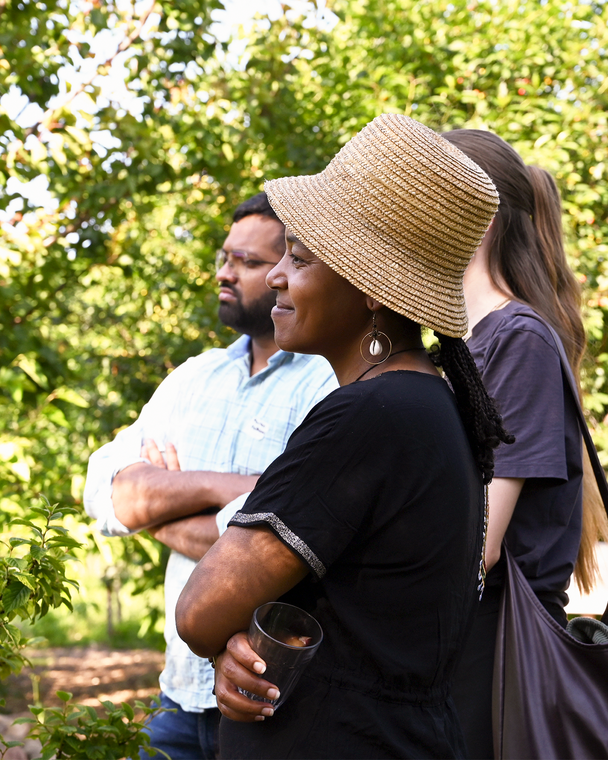
Bei bestem Sommerwetter konnten die Studierenden bei der abschließenden Führung mit Gründungsmitglied und Co-Geschäftsführer Sebastian Kaiser durch die Alte Gärtnerei in Dresden-Pieschen das nachhaltige Leben im Stadtteil sowie den nachbarschaftlichen Zusammenhalt rund um das Projekt kennenlernen. Sie erfuhren außerdem bewegende Details aus der Entstehungsgeschichte des nachhaltigen Garftenprojektes. Auch das praktische Ausprobieren kam in der Alten Gärtnerei nicht zu kurz: einheimische und exotische Früchte wurden verkostet, ein Streifzug durch den Gemeinschaftsgarten unternommen und barfuß selbstgemachte Limonade aus dem Gartencafé geschlürft.
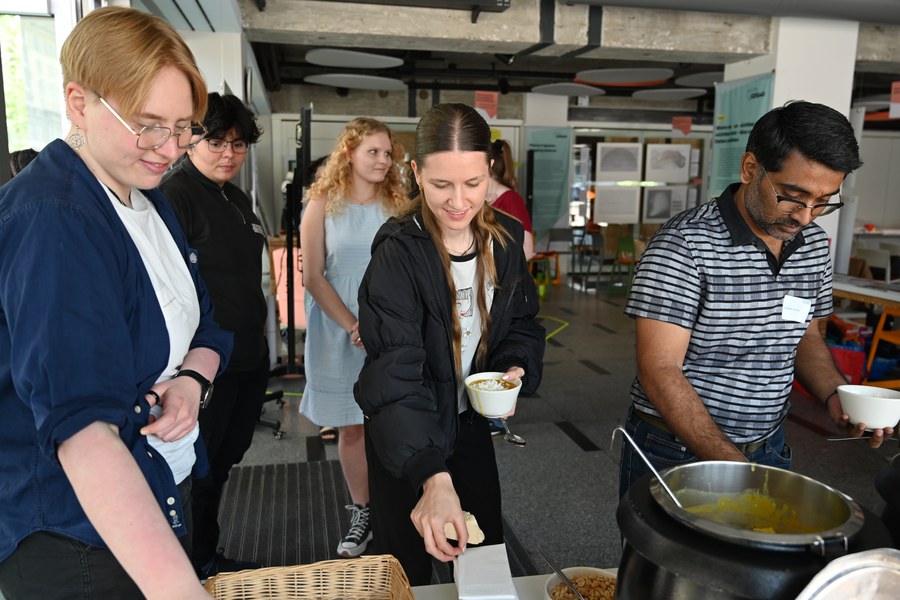
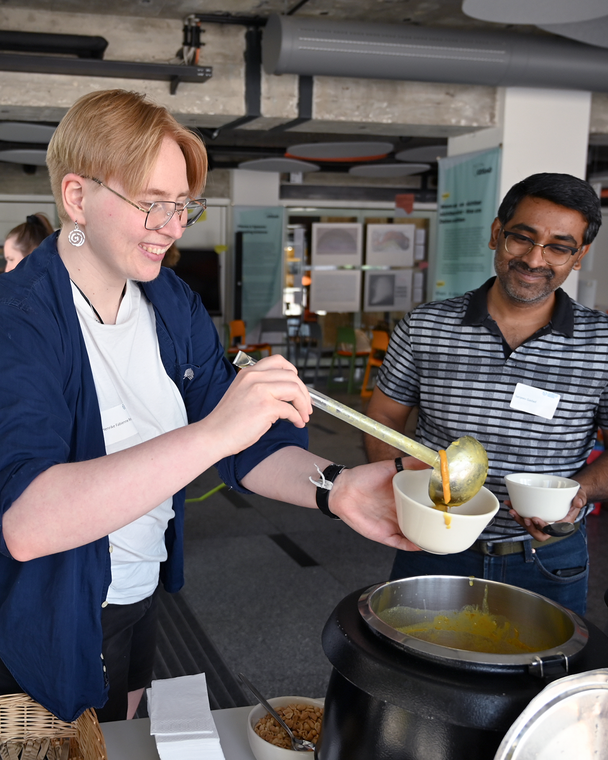
Verpflegt wurden Referent:innen und Teilnehmende an beiden Tagen mit vegetarischen und veganen Suppen der Suppenbar Dresden.
Wir möchten uns ganz herzlich bei unseren Inputgebenden sowie allen Teilnehmenden bedanken und blicken auf ein erfolgreiches drittes TUD Global Citizenship Lab zurück, das einen Unterschied machte. Wir freuen uns schon jetzt auf die nächste Einführungsveranstaltung des GCC-Programms!
Was kommt nach dem Lab?
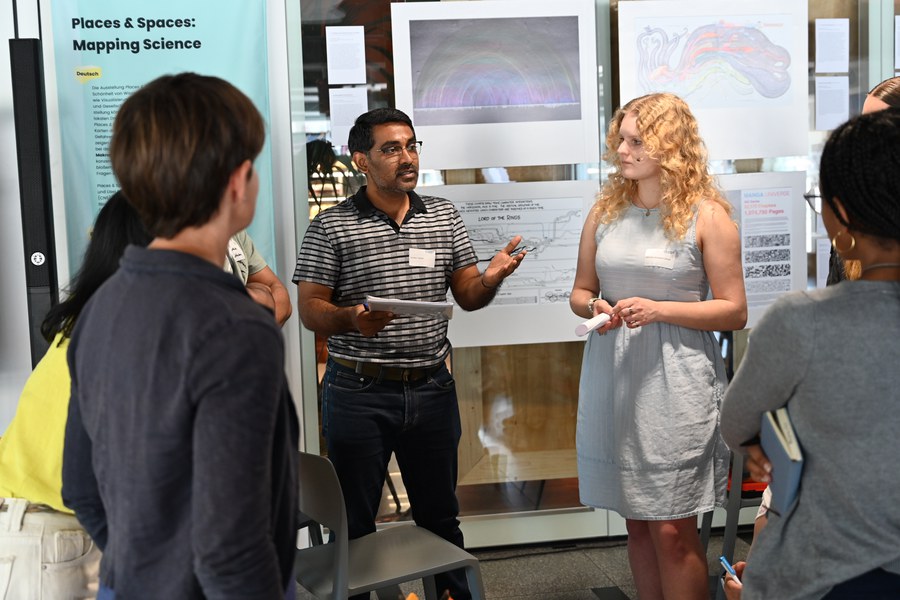
Im Anschluss an das Lab werden sich die zukünftigen TUD-empowered Global Citizens in einer Nachbereitung mit ihren gewonnenen Erkenntnissen auseinandersetzen und einen persönlichen Fahrplan zur Global Citizenship entwickeln. Dabei sind die Teilnehmenden aber nicht allein, sondern können von der neu entstandenen Community, die sich in den zwei gemeinsam verbrachten Tagen gebildet hat, profitieren. Austausch und gegenseitige Unterstützung sind Schlüssel für eine global orientierte und lokal engagierte GCC-Community.
Informiere dich über das TUD Global Citizenship Certificate
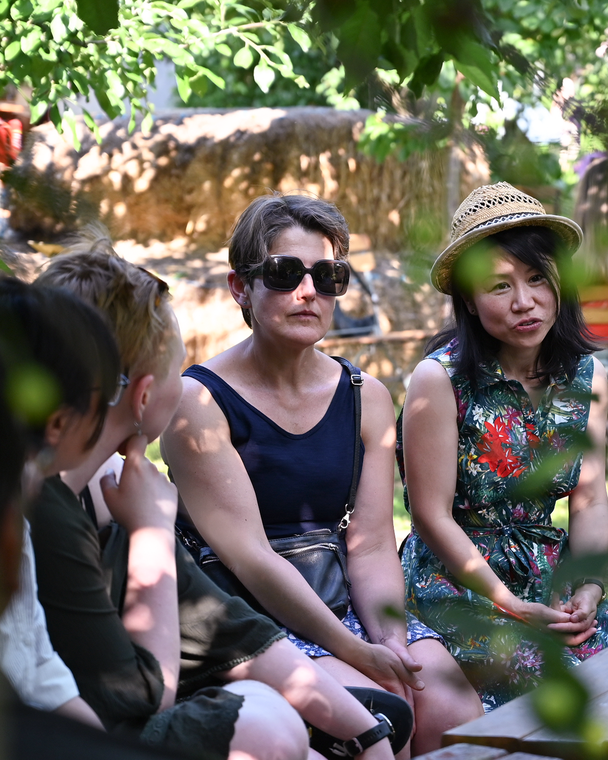
Das im Arbeitsbereich Internationalization@Home des International Office entwickelte Zertifikatsprogramm ist ein aktiver Beitrag der TU Dresden zur Umsetzung des von der UNESCO koordinierten Nachhaltigkeitsziels 4/SDG 4, das eine chancengerechte und hochwertige Bildung für alle Menschen weltweit und ein Leben lang sichern möchte.
Das GCC-Programm richtet sich an alle Studierenden und Promovierenden (inkl. Austauschstudierende) der TU Dresden, fördert und würdigt ihre interkulturellen und globalen Kompetenzen, Erfahrungen sowie ihr lokal-globales Engagement. Es bescheinigt, dass die Teilnehmenden neben ihrem Studium das Wissen und die Fähigkeiten erworben haben, globale Herausforderungen interdisziplinär, ganzheitlich und in ihren ethnischen Dimensionen zu erfassen und ihnen engagiert und kompetent zu begegnen.
Einige Impressionen aus dem Lab:


© Mascha Schelten

© Mascha Schelten


© Mascha Schelten


© Mascha Schelten


© Mascha Schelten


© Mascha Schelten


© Mascha Schelten


© Mascha Schelten


© Mascha Schelten

© Mascha Schelten
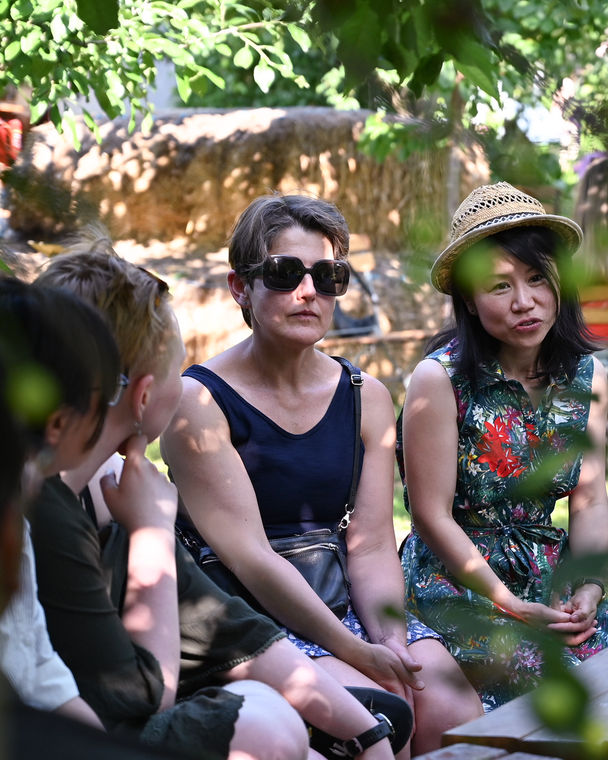

© Mascha Schelten
„Global Citizenship in Times of War and Crisis – Navigating Conflict, Reshaping Peace“ – Rückblick zum TUD Global Citizenship Lab im WiSe 2025/2026

Am 30. und 31. Januar 2026 fand das vierte TUD Global Citizenship Lab statt. An zwei intensiven Tagen kamen engagierte Studierende, Promovierende, Wissenschaftler:innen, Fellows, Mitarbeitende sowie externe Partner:innen zusammen, um sich mit Fragen von Frieden, Konflikttransformation und demokratischer Resilienz auseinanderzusetzen. Organisiert vom Team Internationalization@Home des International Office in Kooperation mit der Philipp Schwartz-Initiative, fand das Lab im COSMO Wissenschaftsforum am Dresdner Altmarkt erneut einen lebendigen Raum für den Austausch zwischen Wissenschaft und Zivilgesellschaft.

Unter dem Motto "Global Citizenship in Times of War and Crisis“ widmete sich das Lab in diesem Winter der Stärkung von Friedens- und Konfliktkompetenzen der Universitätsgemeinschaft: auf individueller, zwischenmenschlicher und gesellschaftlicher Ebene. In interaktiven Workshops, fachlichem Dialog, körperorientierten Reflexionsformaten sowie bei Begegnungen im Stadtraum Dresdens setzten sich die Teilnehmenden damit auseinander, wie globale Verantwortung gerade in politisch herausfordernden Zeiten konkret gelebt und gestaltet werden kann.
Der erste Veranstaltungstag wurde mit einem inspirierenden Grußwort der Prorektorin Universitätskultur und Internationalisierung, Prof. Roswitha Böhm, eröffnet. Sie unterstrich die hohe Aktualität des Themas und die Dringlichkeit, sich gerade jetzt intensiv mit Fragen von Frieden und gesellschaftlichem Zusammenhalt auseinanderzusetzen.

In der Auftaktsession „Peace and Me – Personal Perspectives“ lud das GCC-Team die Teilnehmenden zu einem gemeinsamen Reflexionsprozess ein: Wie prägen kulturelle Hintergründe und unbewusste Vorurteile unser Verständnis von Frieden und Konflikt? Inwiefern beeinflussen unsere Werte und Überzeugungen, wie wir auf globale Krisen reagieren und einander in Zeiten politischer Spannungen begegnen? Zugleich wurde das Awareness-Konzept des Labs vorgestellt und ein Handout zur traumasensiblen Kommunikation bereitgestellt. Damit setzte die Veranstaltung frühzeitig ein Zeichen für Verantwortungsbewusstsein, Achtsamkeit und einen respektvollen Umgang miteinander in den kommenden Tagen.

Als erster Programmpunkt stand der Workshop „Conflict Management in Saxon Municipalities“ auf der Agenda. In diesem interaktiven Format gewährte Dr. Cathleen Bochmann vom Kompetenzzentrum Krisen-Dialog-Zukunft vertiefte Einblicke in ihre langjährige Forschung an der TUD sowie in ihre praktische Tätigkeit als Konfliktmediatorin mit in sächsischen Kommunen. Gemeinsam analysierten die Teilnehmenden Konfliktphasen, Eskalationsdynamiken und das Potenzial dialogorientierter Bürgerformate zur Deeskalation. In einer praxisnahen Übung und einem simulierten Dialogformat erlebten sie unmittelbar, worauf es bei wirksamer Moderation und konstruktiver Kommunikation in stark polarisierten Kontexten ankommt. Die Session machte deutlich: Demokratisch ausgetragene Konflikte können – verantwortungsvoll begleitet – den gesellschaftlichen Zusammenhalt nicht schwächen, sondern nachhaltig stärken.

Eine besonders reflektierende Dimension entfaltete das Lab im Workshop „Peace as Bodily Experience: Peace Ability with Qigong“, geleitet von Nataliya Urban. Ausgehend von Zhong Yuan Qigong und der chinesischen Naturphilosophie wurde Frieden hier als verkörperte Kompetenz und Form bewusster Selbstwahrnehmung verstanden. In achtsamen Bewegungsübungen und philosophischen Impulsen näherten sich die Teilnehmenden der Idee, dass nachhaltiger Frieden im Außen mit innerer Balance und Präsenz beginnt. Der Workshop verband persönliche Kultivierung mit gesellschaftlicher Verantwortung und machte deutlich, dass emotionale Selbstregulation und Selbstbewusstsein grundlegende Voraussetzungen für gewaltfreie Interaktion und eine resiliente Gesellschaft sind.

Den Abschluss des ersten Veranstaltungstages bildete ein Workshop zur Gewaltfreien Kommunikation (GFK), moderiert von Gerlinde Lisa Behnke. Auf Grundlage des von Marshall Rosenberg entwickelten Ansatzes setzten sich die Teilnehmenden mit den „vier Schritten“ der GFK auseinander: Beobachtung, Gefühl, Bedürfnis und Bitte. In praxisorientierten Übungen erfuhren sie, wie der bewusste Fokus auf zugrunde liegende Bedürfnisse und Emotionen konfrontative Gesprächssituationen in konstruktiven Dialog verwandeln kann. Gerade im internationalen Kontext einer Universität bietet diese Methode wertvolle Instrumente, um Missverständnisse sensibel zu klären und Empathie über kulturelle Unterschiede hinweg zu stärken.
Der erste Veranstaltungstag verband damit persönliche Reflexion, verkörperte Achtsamkeit und strukturelle Konfliktkompetenz miteinander und machte deutlich, dass Friedensarbeit auf mehreren Ebenen zugleich gelebt werden muss.
Am zweiten Tag erweiterte sich der Blick von zwischenmenschlichen Fähigkeiten hin zu gesellschaftlichen und globalen Dimensionen von Konflikt und Verantwortung.

Prof. Holger Kuße (Professur für Slawische Sprachgeschichte und Sprahwissenschaft, TUD) eröffnete den zweiten Tag mit einem Vortrag zu Medienmanipulation und Medienkompetenz. Aufbauend auf Ergebnissen eines gemeinsamen Forschungsprojekts mit der Mukhtar-Auezov-Universität in Kasachstan zeigte er auf, wie sprachliche Strategien Konfliktnarrative in den Medien auf Kasachisch und Russisch prägen. Gerade in Zeiten von Krieg und Krise steigt die Verantwortung von Mediennutzer:innen erheblich. Die Teilnehmenden wurden dazu eingeladen, ihren eigenen Medienkonsum kritisch zu hinterfragen und Manipulationsstrategien, Verzerrungen und Desinformationen zu erkennen. Medienkompetenz erwies sich dabei als zentrale Fähigkeit globaler Bürgerschaft im digitalen Zeitalter.

Ein besonderes Highlight des diesjährigen Labs war die Kooperation mit der Philipp Schwartz-Initiative (PSI), gefördert von der Alexander von Humboldt-Stiftung. In einer zweiteiligen Podiumsdiskussion erörterten Fellows, Mentor:innen, Programmvertreter:innen, engagierte Expert:innen aus der Wissenschaft, Zivilgesellschaft und lokaler Politik den Stellenwert der akademischen Freiheit in Zeiten antidemokratischer und wissenschaftsfeindlicher Bewegungen.
Die Podiumsgäste waren: Peter Rosenbaum, Leiter des International Office an der TUD; Prof. Holger Kuße, Institut für Slavistik an der TUD und PSI-Mentor; Dr. Alena Pantiukhina, PSI-Fellow am Institut für Slavistik an der TUD; Claudia Reichert, Leiterin von Leonardo-Sachsen; Prof. Michael Kobel, Institut für Kern und Teilchenphysik, initiator von "Willkommen in Löbtau" und Mitglied im Sächsischen Flüchtlingensrat; Freshta Mujadidi, Stipendiatin vom Maria Reiche Doctoral Fellowships Program am Fakultät Bauingenierwesen, geflüchtete Doktoranin aus Afghanistan; Prof. Oksana Makovoz, Professorin für Management und International Economics am Polytechnic Institute of Kharkiv and an der IHI-Zittau; Eva Jähnigen, zweite Bürgermeisterin und Beigeordnete für Umwelt und Klima, Recht und Ordner von Dresden; Friedemann Brause, Referent für Innenpolitik und zivilgesellschaftliches Engagement am Sächsischen Landeszentrale für politische Bildung.
Dabei wurde deutlich, dass Forschung nur dort gedeiht, wo Freiheit gewährleistet ist, und dass demokratische Gesellschaften auf wissenschaftlich fundiertes Wissen angewiesen sind. In einer anschließenden erweiterten Diskussion mit Vertretenden aus der politischen Bildung, zivilgesellschaftlichen Initiativen und der Stadt Dresden ging es darum, wie Institutionen und Einzelpersonen auf wachsenden antidemokratischen Druck reagieren können. Der Austausch machte deutlich: Der Schutz akademischer Freiheit ist nicht nur eine Aufgabe der Universitäten, sondern eine gesamtgesellschaftliche Verantwortung.
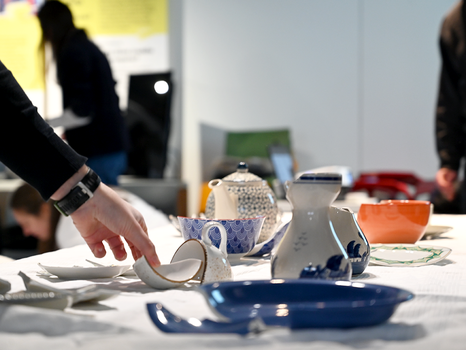
Ein weiteres besonderes Element des Labs war der kreative Workshop „Kintsugi: The Beauty of Scars“, in dem die Themen Bruch und Versöhnung auf künstlerische Weise erfahrbar gemacht wurden.

Inspiriert von der japanischen Kunst, zerbrochenes Porzellan mit Gold zu reparieren, setzten sich die Teilnehmenden mit Brüchen auseinander, die durch Krieg, Migration oder gesellschaftliche Spaltung entstanden sind. Statt Brüche zu verbergen, feiert Kintsugi sie als sichtbare Zeichen von Resilienz. Die Metapher verdeutlicht: Heilung braucht Geduld, beseitigt aber den Schaden nicht, sondern verwandelt ihn in eine gemeinsame Stärke. Im Sinne globaler Bürgerschaft wird Reparatur so zu einem ethischen Handeln, das auf Empathie und Solidarität beruht.

Im Rahmen des Projekts Dresdner Migrationsgeschichten: Miteinander reden, Perspektive wechseln vom Ausländerrat Dresden e.V. führten Ivana Pezlarova und Tatiana Bogdanova die Teilnehmenden auf einem interaktiven Stadtrundgang von der Dresdner Altstadt in die Neustadt. Tatiana Bogdanova – Fachärztin und ehrenamtliche Stadtführerin – teilte persönliche Erfahrungen zu Migration, russischer Kriegspropaganda und ihrem jüdischen Erbe. Biografisches Erzählen wurde so zu einem kraftvollen Bildungsinstrument, das Migration nicht als abstraktes politisches Thema, sondern als gelebte Erfahrung erfahrbar machte. Auf dem Rundgang durch die Stadt trafen Erinnerungsorte auf persönliche Geschichten – Dresden wurde so zu einem lebendigen „Klassenraum“ für Global Citizenship.

Das Lab endete im Weltclub in der Neustadt bei Afropa e.V. Im Gespräch mit Marita Schieferdecker-Adolph, Paolo Le van, Thomas Kollecker und Dr. Hussein Jinah diskutierten die Teilnehmenden die Migrationsgeschichte in der ehemaligen DDR, die selbstorganisierte Arbeit von Migrantengemeinschaften nach der Wiedervereinigung sowie das zeitgenössische zivilgesellschaftliche Engagement gegen Rassismus. Dabei wurde auch der Bedeutung des Erinnerns nachgegangen – unter anderem an die rassistischen Morde an Jorge Gomondai (1991) und Marwa El-Sherbini (2009) in Dresden. Die Erinnerung an diese Ereignisse wurde als bürgerschaftliche Pflicht verstanden und als Grundlage für demokratische Wachsamkeit und Solidarität hervorgehoben. Bei gemeinsamem indischem Essen, das von Dr. Hussein Jinah zubereitet wurde, entstand ein Abend, der Dialog, Erinnerung und Gemeinschaft in einer Atmosphäre von Offenheit und gegenseitigem Respekt zusammenführte.

In einer Zeit, die von Krieg, Polarisierung und Unsicherheit geprägt ist, sendete das Lab eine klare Botschaft: Frieden ist Praxis. Verantwortung wird geteilt. Global Citizenship beginnt bei jedem Einzelnen von uns.
An beiden Tagen wurden die Teilnehmenden zudem mit einer Auswahl warmer Suppen von der Suppenbar Dresden verpflegt.
Wir möchten uns ganz herzlich bei unseren Inputgebenden sowie allen Teilnehmenden für ein erfolgreiches und bereicherndes viertes TUD Global Citizenship Lab bedanken und freuen uns bereits auf die nächste Einführungsveranstaltung des GCC-Programms im Sommersemester!
Was kommt nach dem Lab?
Das TUD Global Citizenship Lab im Wintersemester 2025/26 zeigte eindrücklich, dass Global Citizenship kein abstraktes Ideal, sondern gelebte Praxis ist. Sie erfordert innere Reflexion, kommunikative Kompetenz, kritisches Denken, künstlerische Vorstellungskraft, bürgerschaftliches Engagement und den Einsatz für demokratische Prinzipien.

Im Anschluss an das Lab setzen die Teilnehmenden ihre Reise im Rahmen des GCC-Programms fort – sie reflektieren ihre Erfahrungen und entwickeln einen persönlichen Fahrplan zur Global Citizenship. Unterstützt durch die wachsende GCC-Community bleiben sie über die zweitägige Veranstaltung hinaus miteinander verbunden.
Informiere dich über das TUD Global Citizenship Certificate
Das im Arbeitsbereich Internationalization@Home des International Office entwickelte Zertifikatsprogramm ist ein aktiver Beitrag der TU Dresden zur Umsetzung des von der UNESCO koordinierten Nachhaltigkeitsziels 4/SDG 4, das eine chancengerechte und hochwertige Bildung für alle Menschen weltweit und ein Leben lang sichern möchte.

Das GCC-Programm richtet sich an alle Studierenden und Promovierenden (inkl. Austauschstudierende) der TU Dresden, fördert und würdigt ihre interkulturellen und globalen Kompetenzen, Erfahrungen sowie ihr lokal-globales Engagement. Es bescheinigt, dass die Teilnehmenden neben ihrem Studium das Wissen und die Fähigkeiten erworben haben, globale Herausforderungen interdisziplinär, ganzheitlich und in ihren ethnischen Dimensionen zu erfassen und ihnen engagiert und kompetent zu begegnen.
Einige Impressionen aus dem Lab:


© Mascha Schelten

© Mascha Schelten


© Mascha Schelten


© Mascha Schelten


© Mascha Schelten


© Mascha Schelten


© Mascha Schelten


© Mascha Schelten


© Mascha Schelten


© Mascha Schelten


© Mascha Schelten


© Mascha Schelten


© Mascha Schelten


© Mascha Schelten

Gefördert vom Bundesministerium für Bildung, Technologie und Raumfahrt (BMFTR) und dem Freistaat Sachsen im Rahmen der Exzellenzstrategie von Bund und Ländern.