
BQL.Digital
Table of contents

As an integral part of the academic training program for the part-time teacher qualification (BQL) at TU Dresden,BQL.Digital offers comprehensive support services in the areas of digital education and digital teaching.
The offerings include interactive teaching and learning resources, customized self-study modules, and technical, media-didactic, and digitalization-related support for both participants and instructors in the part-time teacher training program. In addition, the media lab is utilized for instructional purposes. Furthermore, the BQL.Digital team publishes research —for example, on innovative digital teaching and learning formats—and actively participates in national and international conferences.
Digitalization-Related Teaching and Learning Programs

BQL.Digital supports teaching at BQL with customized digitalization-related teaching and learning offerings. Topics range from creating your own explanatory videos to topics in artificial intelligence. These teaching and learning offerings can take place both in person and online. They combine theoretical content with its practical application, allowing students to experiment and interact with classroom examples to facilitate the transfer of knowledge to the school setting.
The teaching and learning programs are developed through multiprofessional collaboration with instructors of BQL subjects and adapted to their subject-specific teaching and learning contexts. This results in subject-specific, digitalization-focused concepts that address the needs of BQL participants as well as the disciplinary and pedagogical goals of BQL instructors. The offerings are integrated into required courses and systematically promote digitalization-related competencies.
Insights into teaching and learning offerings:
Through interactive activities, participants explore their own ideas about digitization, define key terms such as “digitization” and “digitality,” and discuss their significance for schools, teaching, and communication and work processes.
Proficient use of digital services is the foundation of modern teaching. BQL.Digital offers a structured introduction to key digital tools that are relevant for participation in the BQL program, teaching, and school-based practice. Among other things, participants will become familiar with learning management systems, cloud applications, email services, and video conferencing systems, and will receive practical guidance on the digital infrastructure.
Computer science education is a central component of digitalization-related education. Through hands-on teaching and learning activities, participants explore computer systems from everyday life and recognize how naturally children already interact with them. Building on this foundation, depending on the program’s focus, fundamental concepts such as the input–processing–output (IPO) principle, data encoding, and basic programming concepts are introduced. The focus is always on implementing these concepts with students.
The goal of these teaching and learning programs is to provide a hands-on experience with artificial intelligence (AI). Participants will gain an understanding of the potential and challenges of AI—both in general and in specific subject areas—and, depending on the program’s focus, will also gain insight into concrete, action-oriented applications for schools and classrooms.
- From Technology to Pedagogy: Artificial Intelligence in Lesson Planning
- Rethinking Digital Reading: A Teaching and Learning Program from BQL.Digital on Search Engines and Artificial Intelligence
- Workshop series on “Artificial Intelligence in German Language Classes”
- Event Series “AI in Schools & Higher Education”
-
Workshop Series: How Social Media and Artificial Intelligence Are Shaping the Schools of Tomorrow
The following article provides an overview of the AI offerings in the BQL program:
Explanatory videos are short, clear videos that present complex topics in a simple and understandable way. They combine visuals, audio, and text to present educational content and promote understanding. In our teaching and learning programs, the focus is on creating explainer videos together with students in the classroom. To gain experience in this area, participants take on the role of learners themselves and produce their first explainer videos using cutout animation or stop-motion, depending on the program’s focus.
- BQL German & BQL.Digital: The workshop “Explanatory Videos in Literature Class” gave rise to fairy-tale-like creations
- BQL.Digital Teaching and Learning Program: The WTH/S Group Dives into the World of Explanatory Videos and Podcasts
- Roll Camera! – Seminar on Creating Explanatory Videos in Social Studies
- International Visitors at the Media Lab at ZLSB: BQL.Digital Presents an Explanatory Video Teaching Concept
- Explanatory Video Workshop at the Dresden Science Night
- BQL.Digital at E-Teaching Day: Online workshop on creating explainer videos
Greenscreen technology is no longer limited to the world of film; it can also be used in the classroom with simple tools. In this workshop, participants will receive a hands-on introduction and bring their own creative ideas to life—from virtual trips to imaginative scenarios.
In addition to the technical aspects, the workshop focuses on how green screen technology can be meaningfully and creatively integrated into classroom instruction.
Podcasts have now evolved into much more than just a form of leisure entertainment. They have become a versatile medium that can also offer significant benefits in the field of education. In teaching and learning programs on this topic, participants take on the role of learners and create their own podcasts. In the process, they gain hands-on experience in how to successfully incorporate this creative medium into their classrooms with their students. By gaining experience and experimenting with different formats, they gain valuable insights into the possibilities that podcasts offer for learning and teaching.
- Creative Media Productions for Career Changers: Explanatory Videos and Podcasts in BQL Computer Science
- Listen, Learn, Produce: Fairy-Tale Podcast Projects in Elementary School German Classes
- BQL.Digital Teaching and Learning Program: The WTH/S Group Dives into the World of Explanatory Videos and Podcasts
-
“Lese-Zentrum” Book Podcast: Personal Reading Recommendations from the ZLSB
Self-study modules on digitalization-related topics and digital tools
The online self-study modules are designed to digitally replicate in-person offerings, thereby enabling self-directed, asynchronous learning on digitalization-related teaching and learning content. These modules provide a structured learning path with information pages, explanatory videos, and screencasts. Experts from the field of teacher education share their experiences using the tools in short videos. After completing a module, participants can test their knowledge in a quiz and exchange ideas in an OPAL forum.
Insights into a selection of the online self-study modules:
In this self-study module from BQL.Digital on the topic of AI, the teaching and learning resources for the various subjects in the BQL program are presented in a consolidated format and supplemented with materials, tips, and helpful documents.

Einblick in Struktur und Inhalte des Selbstlernmoduls „Programmieren mit Scratch“
The self-study module “Programming with Scratch” provides a brief introduction to the block-based programming environment Scratch and explains its structure and basic functions. It demonstrates how Scratch can be used in elementary school German classes in accordance with the Saxon curriculum. An embedded news article describes a specific teaching-and-learning scenario for computer science education. In addition, the module provides a guided introduction to Scratch and presents sample programs as templates and practice exercises. This gives teachers quick, practical ideas for use in the classroom.
- Link to the self-study module “Programming with Scratch” in OPAL (accessible only with a ZIH login)
In this learning unit, participants will learn how to create their own podcast and how to use this medium in school.
In this learning module, participants will learn how explanatory videos are structured and how they can be used in the classroom. They will gain in-depth insights into the preparation for filming, as well as the technical requirements and options for post-production.
This professional development series explores the potential of several applications (GeoGebra, spreadsheet programs, and the smartphone apps PhotoMath and MathCityMap) by providing ideas for instructional scenarios on topics from algebra, geometry, and probability and statistics. The focus is always on promoting understanding, discovery, and the application of mathematics.
In this learning module, participants will learn more about green-screen technology. They’ll explore practical examples from the film industry and receive ideas for incorporating this technique into their classrooms. Additionally, they can get started right away using a step-by-step guide to create their own green-screen video.

In addition, BQL.Digital offers over 20 self-paced learning modules in the BQL.Learn section of the OPAL course “BQL.Digital” for the practical use of digital media in the classroom. The modules cover, among other topics, the use of devices such as Calliope Mini or interactive whiteboards, collaborative tools such as Padlet, CryptPad, and TaskCards, as well as interactive learning resources such as LearningApps, Kahoot!, and H5P.
Support for digital services and digitization-related topics

BQL.Digital provides individualized support to BQL instructors and those new to the field with technical and digitization-related questions.
In addition to personal consultations, BQL.Digital provides practical guides, instructional videos, and self-study modules centrally in the OPAL course “BQL.Digital ” under “Support.”
Educational Use of the Media Lab

The Media Lab at the ZLSB is a central hub for exploring technical possibilities: Here, everyone involved in teacher training has the opportunity to try out innovative media technology for educational purposes. The lab is equipped with modern technology to train newcomers in areas such as podcast creation, explainer video production, and the use of green screen technology. For more information, see “Offers > Media Lab ” and the OPAL course “The Media Lab at the ZLSB.”
Publications

Since the launch of BQL.Digital in 2018, the BQL.Digital team has been actively participating in national and international conferences to present research findings and exchange ideas with other researchers. For more information, see Publications.
In the News section, you’ll also find selected updates on BQL.Digital’s activities at TU Dresden.
Contact
Dr. Christin Nenner and Dagmar Oertel () are available to answer any questions you may have about BQL.Digital ’s offerings:
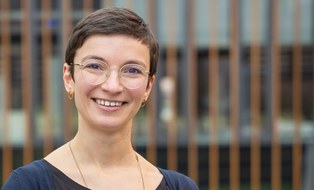 © Steffen Schreiber
Research associate
NameMs Dr. Christin Nenner
BQL.Digital
Send encrypted email via the SecureMail portal (for TUD external users only).
Center for Teacher Education and Educational Research (German abbreviation: ZLSB)
Center for Teacher Education and Educational Research (German abbreviation: ZLSB)
Visiting address:
SE2 Seminargebäude 2, Room 14 Zellescher Weg 20
01217 Dresden
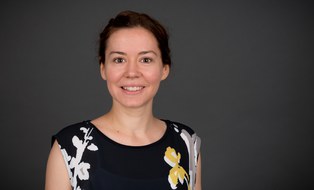 © Kirsten Lassig
Research associate
NameMs Dipl.-Medieninf. Dagmar Oertel
BQL.Digital
Send encrypted email via the SecureMail portal (for TUD external users only).
Center for Teacher Education and Educational Research (German abbreviation: ZLSB)
Center for Teacher Education and Educational Research (German abbreviation: ZLSB)
Visiting address:
SE2 Seminargebäude 2, Room 14 Zellescher Weg 20
01217 Dresden